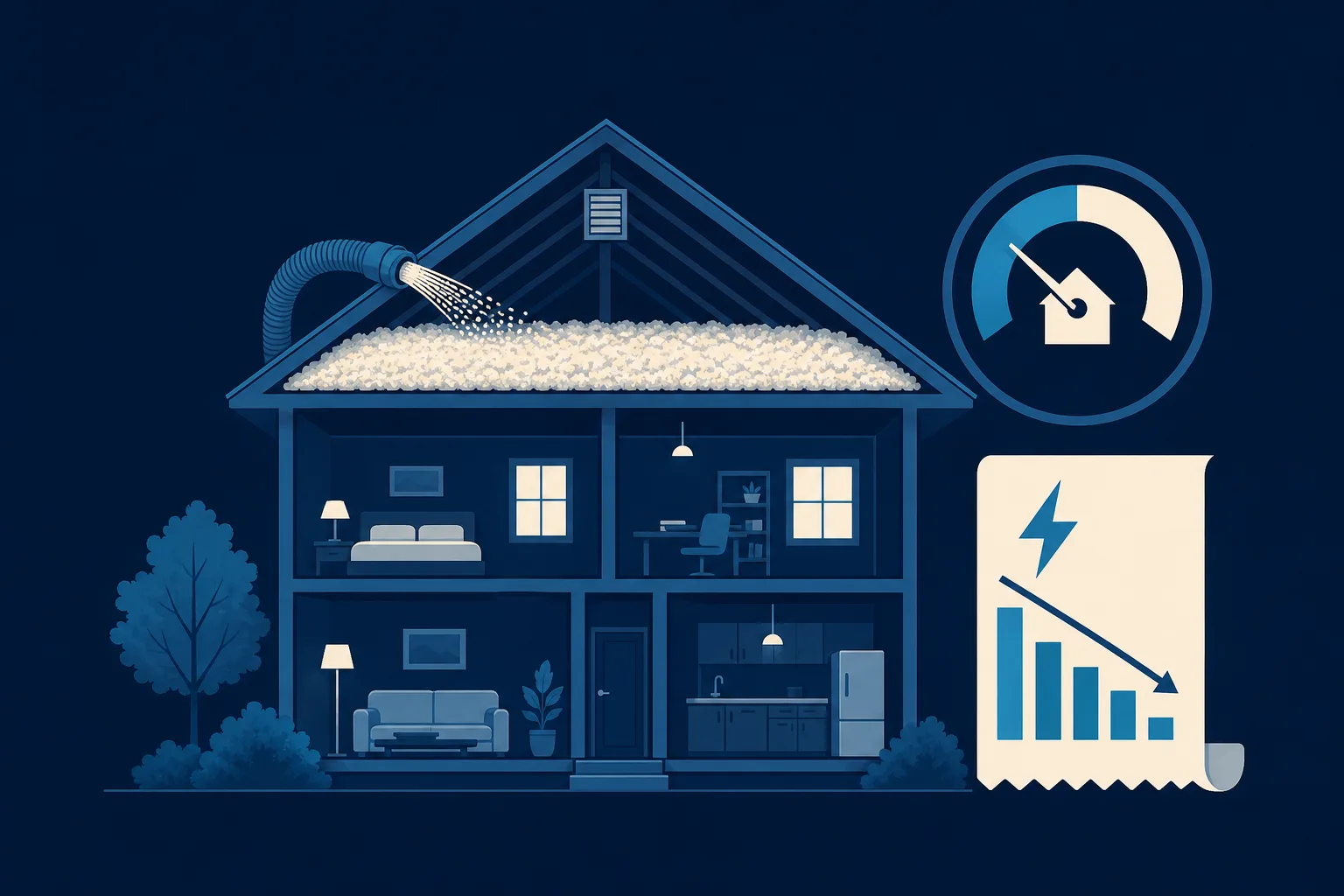
Nobody wakes up excited to buy insulation. They wake up because the upstairs bedroom is freezing, the AC never keeps up in July, or a natural gas bill just landed that made them say a word they would not say in front of the kids. That is the person searching at 9pm on their phone. If you want to build a website for an insulation contractor that actually books jobs, you build it for that exact moment: a homeowner who feels a problem, does not know the fix, and needs to trust someone enough to let them into the attic.
This guide is written for a first-time website owner. Maybe you have run your insulation crew for years off referrals and a truck wrap, and you have never had a real website. That is fine. You do not need to become a marketer. You just need a site that speaks to comfort, savings, and rebates in plain language, and that ends with one clear ask: schedule a free home assessment.
Start with the feeling, not the R-value
Most insulation websites open by bragging about materials. R-values, cellular structure, closed-cell versus open-cell, the manufacturer's name in a big logo. A homeowner reading that feels dumb, and confused people do not book.
Flip it. Lead with the symptom, because the symptom is what they typed into Google.
- "Is one room in your house always too hot or too cold?"
- "Are your energy bills climbing every year with no explanation?"
- "Does your floor feel cold in winter and your attic feel like an oven in summer?"
Under each, one sentence that says insulation is often the fix and you can tell them for free. You are not teaching a physics class. You are saying "I know exactly what you are feeling, and I fix it." The R-value details belong deeper down the page, for the researcher who wants them. The top of the page belongs to the tired homeowner who just wants to be comfortable again.
Frame everything around comfort and energy savings
Insulation is invisible. Once it is installed, the customer never sees it, so they are not buying a product. They are buying two outcomes: an even, comfortable house and lower monthly bills. Your whole website should keep pointing back to those two.
Comfort language that lands:
- Even temperatures from room to room, floor to floor
- A bonus room, garage, or finished basement that is finally usable year-round
- Less noise from outside and between floors
- No more drafts, cold spots, or that stuffy summer upstairs
Savings language that lands:
- Lower heating and cooling bills every month, not just once
- An HVAC system that stops running constantly and lasts longer
- A payback period, so the job pays for itself over time
Be careful and honest with savings numbers. Do not promise a specific percentage on your site, because every house is different and a homeowner who does not see it will feel cheated. Say something you can stand behind: "Many homes we insulate see a noticeable drop in heating and cooling costs, and we will give you an honest estimate of your savings during the assessment." Honesty here is a selling point, not a weakness. It is what separates you from the pushy discount installer.
Make rebates the reason to act now
Here is the piece most insulation sites bury or skip entirely, and it is your biggest booking lever. Insulation is one of the few home upgrades with real money attached to it: federal tax credits for energy-efficient home improvements, utility company rebate programs, and state or local weatherization incentives. Homeowners have usually heard rebates exist but have no idea how to get them. That confusion is an opportunity.
Give rebates their own section and make it do three jobs:
- Explain simply that money is available. "You may qualify for tax credits and utility rebates that lower the cost of your insulation project."
- Position yourself as the guide. "We help you understand which programs you may qualify for and handle the paperwork most homeowners find confusing." You are not just an installer, you are the person who unlocks the savings.
- Create urgency without lying. Rebate programs change, run out of funds, and have deadlines. "Programs and funding change through the year, so it is worth checking what is available now." That is true and it moves people off the fence.
Do not print specific dollar amounts or program names that expire, because a stale number on your website ages badly and can even mislead. Keep the rebate section evergreen and let the specifics come out during the assessment, when you can look up exactly what applies to their address and utility. This is also a great honesty filter: an installer who talks openly about helping you get rebates feels like they are on your side.
Give attic and spray foam their own pages
"Insulation" is too broad to rank on Google or to reassure a specific homeowner. Someone with a hot upstairs is searching for attic insulation. Someone finishing a basement or building an addition is searching for spray foam. Give the main services their own pages, each written for that specific buyer.
Attic insulation page
This is your highest-volume, most emotional job, because the attic is where comfort and bills go to die. Write it for the person with a temperature problem.
- What blown-in attic insulation is, in one plain paragraph
- The signs they need it: hot upstairs, ice dams in winter, uneven temperatures, an old house with thin insulation
- What the job actually looks like, so a nervous homeowner is not surprised: crew arrives, protects the floors, works from the attic access, most jobs done in a day
- Before-and-after photos of an attic (thin, patchy, dirty old insulation next to a clean, deep, even blanket of new insulation)
Spray foam insulation page
Different buyer, different mindset. This person is often renovating, building, or dealing with a specific space like a rim joist, crawl space, or metal building. They have usually researched and want a contractor who clearly knows the difference between open-cell and closed-cell, without drowning them in it.
- When spray foam is the right choice versus traditional insulation
- The air-sealing benefit, explained as "it stops drafts and blocks moisture, not just slows heat"
- Where it shines: crawl spaces, rim joists, additions, cathedral ceilings, metal buildings
- A calm note on safety and cure time, because people have questions about the chemicals and you look confident by answering plainly
If you also do wall insulation, crawl space encapsulation, or air sealing, each gets a short section or its own page. The rule is simple: match a page to how a real homeowner describes their problem.
Prove you are trustworthy before you ask for the attic
Letting a stranger crawl through your attic or spray foam in your crawl space is a big trust ask. Your website has to earn it before the phone rings.
- Real photos of your crew and trucks. Not stock photos of models in clean hard hats. A homeowner wants to see the actual people who will show up. Phone photos of your team on a real job beat glossy fakes every time.
- Before-and-after galleries. Insulation is invisible, so before-and-after is your best proof. Show the sad old attic and the fresh install. Show the frost-covered crawl space and the sealed, dry one.
- Reviews that mention comfort and savings. Ask happy customers to mention the specific result: "our upstairs is finally usable" or "our winter gas bill dropped." Those beat a generic five stars.
- Licensing, insurance, and any certifications. State it plainly. Manufacturer certifications and insurance are quiet trust badges that make you feel like a real company, not a guy with a truck.
- A local service area list. Name the towns and counties you cover. It reassures the homeowner you actually work near them and it helps you show up in nearby searches.
Make the free home assessment the one clear next step
Every page should point to a single action: book a free home assessment. Not "contact us," not "learn more." A named, valuable, no-pressure appointment. The assessment is the perfect offer for insulation because the homeowner genuinely cannot buy without it. You have to see the attic to quote the job. Lean into that.
Your booking request should be short. The fields that matter:
- Name and phone
- Address or town (you need it to check rebates and plan the visit)
- The main problem, in a simple dropdown: hot or cold rooms, high energy bills, new construction or remodel, not sure
That last "not sure" option matters. Plenty of people know something is wrong but cannot name it. Do not make them diagnose themselves before they are allowed to reach you.
A few things that lift bookings on an insulation site specifically:
- Put a click-to-call button in the header on mobile, since a chunk of your visitors are frustrated and want a human now.
- Say what the assessment includes, so it feels real: "We inspect your attic and problem areas, check what insulation you have, explain your options, tell you which rebates you may qualify for, and give you a written quote. No pressure, no obligation."
- Set a response expectation: "We reply within one business day." Silence after a form loses the job to the next contractor.
Do not overbuild it, and do not let it go stale
You need maybe six things and nothing more: a homepage built around comfort and savings, an attic insulation page, a spray foam page, a rebates page, a simple about page with real faces, and a booking or contact page. That is a website that books jobs. A ten-page site nobody updates does less than a tight six-page one that clearly says what you do and how to reach you.
The catch with insulation is that the seasons and the rebates keep shifting. In late summer people worry about the coming heating bill. In spring they think about the AC. Rebate programs open, fill up, and close. A website that still leads with winter messaging in July, or mentions a program that ended, quietly costs you jobs. Most contractors never touch their site after launch because editing it means emailing a web person and waiting a week.
This is where being able to change your own site in plain language matters. With Saynovo you say what you want changed, like "put the rebate deadline reminder at the top of the homepage" or "swap the hero to talk about hot upstairs bedrooms," and the site updates. For a contractor whose evenings are already full, that is the difference between a site that stays current and one that rots.
Getting it built without becoming a web designer
You have real options, and the honest answer depends on how much you want to touch.
- Wix or Squarespace if you enjoy tinkering and have a few weekends to build and maintain it yourself.
- WordPress or a local web agency if you want something highly custom and have the budget and patience to manage it.
- A done-for-you option if you would rather run your crew than fight with a page editor. Saynovo can generate a full insulation contractor website around your existing Google Business Profile, so your real reviews, hours, and photos are already in place. The rebates you handle, your R-value guidance, and the towns you cover were never on Google, so you add those, and keep them current, just by telling it what to change. If you want everything handled at an agency level, SyntroAI is the fully-managed route.
Whichever you choose, keep the target in mind: a homeowner who feels a problem, does not understand the fix, and needs to trust you enough to open the attic. Speak to comfort and savings, make rebates the reason to act, give attic and spray foam their own clear pages, and end every path with a free home assessment.
Your one next step: write the three sentences that describe the comfort and savings your work delivers, and the exact promise of your free assessment. That copy is the heart of the site, and everything else is built to point at it.