Pet sitting is one of the most personal jobs there is. A stranger is asking you to hand over a house key, your alarm code, and the most important living thing in your home, then leave the state for a week. That is a huge amount of trust to ask for from someone who found you online five minutes ago.
That is exactly why a website matters so much for a pet sitter, and why you may not need one the way a bigger company does. You are not trying to look flashy. You are trying to make a nervous pet parent feel calm enough to book you, and then so relieved when they get home that they never call anyone else again. This guide walks through how to build a website for a pet sitter that books repeat clients, step by step, in plain language, even if you have never owned a website in your life.
Start by knowing exactly who is reading
The person landing on your site is usually stressed. They have a trip coming up, sometimes soon, and they have been putting off the one thing they dread: leaving their pet. They are not comparing forty sitters. They found two or three names, and they are quietly deciding which one feels safe.
They are asking silent questions the whole time they read:
- Is this a real person, or an app that sends whoever is available?
- Will they actually show up every day, or forget?
- What happens if my dog gets sick while I am gone?
- Can I trust them alone in my home?
- Will I hear anything, or just come home and hope?
Your website has one job: answer those questions before they have to ask. Everything else is decoration. If your site makes a worried pet parent exhale, you have won.
Make the in-home vs boarding choice crystal clear
This is the single most important thing that sets your site apart from a big kennel, and most pet sitting websites bury it. Say it loud, near the top.
In-home pet sitting means the pet stays in its own house, in its own bed, with its own smells and routine, while you come by to feed, walk, medicate, and give attention. Boarding means the pet goes somewhere else, often a facility with other animals. For a lot of pet parents, that difference is the entire reason they searched. Their dog is anxious, or old, or their cat would be miserable anywhere but home.
Spell out what you actually do:
- Drop-in visits. You come by a set number of times a day. Say how long a visit lasts (many sitters do 30 or 45 minutes) and what happens in one: feeding, fresh water, a walk or litter scoop, playtime, meds, and a quick tidy.
- Overnight stays. You sleep at the client's home so the pet is never alone at night. Say this clearly if you offer it, because it is a premium service and the people who want it want it badly.
- What you do not do. If you never board pets in your own home, say so. Anxious owners find that reassuring, not limiting.
When someone reads this and thinks "yes, that is exactly the kind of care I wanted," the booking is half done.
Build trust like the whole business depends on it, because it does
A roofing customer wants a good roof. A pet sitting customer is handing you a key. Trust is not one section of your site. It is the entire product. Weave proof through every page.
Say insured and bonded, and explain what it means
Most pet parents have seen the words "insured and bonded" and have no idea what they mean. Do not just stamp a badge and move on. In one or two plain sentences, tell them:
- Insured means if their pet or their home is accidentally hurt while in your care, there is a real policy that covers it, not just your promise.
- Bonded means they are protected against theft while you are in their home. It is a guarantee, backed by money, that you are safe to let inside.
Two sentences of explanation do more for a first-time client than a row of shiny seals they do not understand.
Show your face and tell your story
People are inviting a human into their home, so let them meet the human. A real photo of you, ideally with a dog or cat, beats any stock image ever made. A short story about why you started, how many years you have done this, whether you have pets of your own, and any training like pet first aid or a certification, turns "some sitter" into "someone I would trust."
Let other pet parents do the convincing
Reviews are your most powerful trust builder, because a nervous owner believes another owner over any claim you make. Pull your best ones onto the site with first name, neighborhood, and the pet's name if you can. A review that says "Bella has separation anxiety and Maria sent me a photo of her sleeping happily by day two" is worth more than a hundred adjectives. If you are brand new, ask your first few clients for a short review the day they get home, while the relief is fresh.
Feature the daily update, because it is your secret weapon
Here is what actually turns a one-time client into a client for life, and almost no website mentions it: the update.
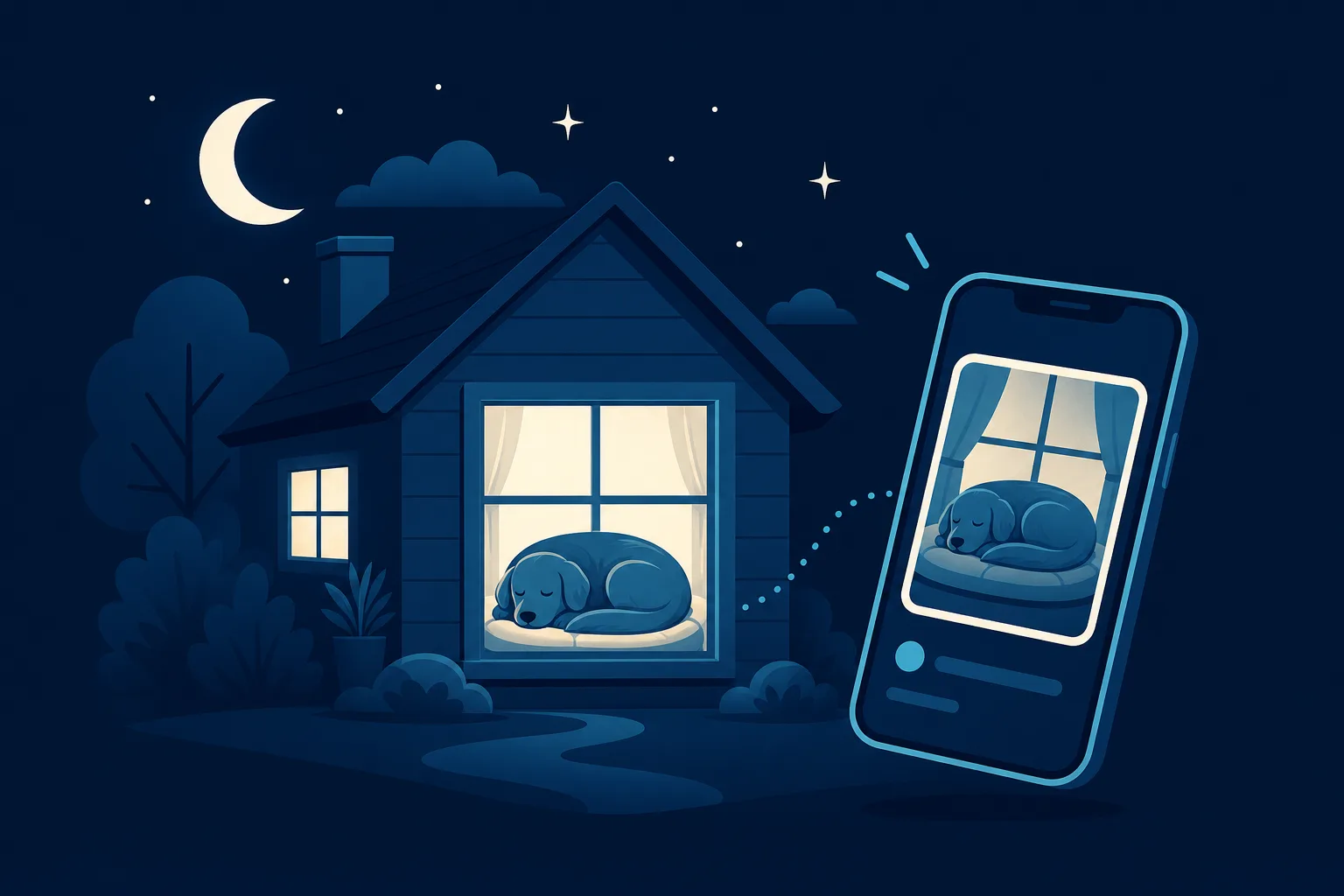
When a pet parent is on a beach a thousand miles away, the thing they crave is a text with a photo of their dog looking happy, or a note that the cat finally came out from under the bed. That single message is the emotional core of your whole service. It is the difference between a client who worried the whole trip and a client who relaxed because they saw proof twice a day.
Put this front and center on your site:
- Promise a photo and a short note after every visit, so they always know their pet is fine.
- Describe it in human terms: "You will get a picture and a quick update each visit, so you can actually enjoy your trip."
- If you use pet sitting software that sends a visit report card, mention it, but keep the promise simple. What they want is the feeling, not the feature name.
The daily update is your best marketing and your best retention tool at the same time. Sell it hard.
Walk them through exactly how it works
First-time clients do not know the process, and the unknown makes them hesitate. A simple "How it works" section removes the friction. Keep it to a few plain steps:
- Reach out. A short form or a call to check your dates.
- The meet and greet. A free in-home visit before the trip, where you meet the pet, they meet you, and you go over feeding, meds, the vet, and where the leash lives. Emphasize this. It is the moment nobody is handing a key to a stranger, and it calms everyone down.
- Booking is confirmed. You lock the dates and they get the plan in writing.
- The trip. You visit, you update, they relax.
- Welcome home. The pet is safe, the house is fine, and you are already the person they call next time.
That meet and greet is worth a paragraph of its own on your site. It is the single best answer to "how do I know I can trust you," so do not let it hide in the fine print.
Plan the whole site around the holiday rush
Pet sitting has a seasonality that almost nobody designs their website for, and it is a huge missed opportunity. Thanksgiving week, the December holidays, spring break, and summer are when demand explodes and your calendar fills first. Your site should be built for that surge.
- Put a booking nudge up during peak seasons. A simple line like "Holiday weeks fill early, reach out now to hold your dates" creates the right urgency without being pushy. It is honest, because it is true.
- Explain your holiday lead time. If you need more notice for Thanksgiving and Christmas, say so, so people book in October instead of panicking in November.
- Be clear about holiday availability and any holiday rates. Setting the expectation up front prevents awkward conversations later and makes you look like a professional who plans ahead.
The pet parent who books you for their first Thanksgiving trip, has a great experience, and gets a photo of their dog every day is the pet parent who books you for spring break, summer, and every holiday after. Design for the rush and you are designing for years of repeat work.
Make the pages simple and the booking easy
You do not need a giant website. A pet sitter often does great with a handful of focused pages:
- Home. Who you are, in-home care in your area, insured and bonded, the daily update, and one clear way to reach you.
- Services. Drop-in visits, overnights, what a visit includes, and the areas or neighborhoods you cover. Be specific about your service area, because someone across town needs to know you actually come to them.
- About. Your face, your story, your experience.
- Reviews. Real words from real pet parents.
- Contact or book. One simple form asking for their dates, their pet, and any special needs like medication.
A few notes that matter for pet sitting specifically:
- Most people will read you on a phone, often in bed the night before a trip while they finally deal with the pet situation. If your site is hard to use on a phone, you lose them. Make sure the layout works small and the phone number taps to call.
- Ask the right questions on your form. Dates, number of pets, type of pet, and whether any medication is needed. That last one lets you price and prepare, and shows you take medical care seriously.
- Do not overshare your rates if they vary, but do not hide the ball either. A range or a clear "reach out for a quote based on your pet's needs" is fine. Anxious clients care more about trust than price.
Getting it built without becoming a web designer
You have a few honest options, and the right one depends on how much you want to touch.
If you enjoy tinkering and have weekends to spare, a builder like Wix or Squarespace can get you online yourself, and there is nothing wrong with that. If you want a bigger custom system with pet sitting software wired in and you have the budget, a hands-on web agency or a fully-managed setup like SyntroAI can handle the whole thing.
But most pet sitters are not looking for a hobby. You are out doing visits, and the website is a thing you need to exist, look trustworthy, and stay current, without becoming a second job. That is the gap Saynovo is built for. If you already have a Google Business Profile, Saynovo can generate a real website around it, free for that first build, so you can see your own site before spending a cent. Your rates, your daily-update promise, and your insurance and bonding were never on Google, so you say those and they appear. And because it is done for you, the whole thing is set up rather than left as homework.
The part that fits pet sitting especially well is how you keep it updated. When your holiday availability changes, or you add overnight stays, or you want to swap in a glowing new review, you just say what you want changed and the site changes. No dashboards, no wrestling with layouts on your phone between visits. You talk, it updates, and you get back to the dogs.
Your one next step
Do not try to build everything today. Do this one thing: write down, in your own words, the three sentences you would say to a nervous first-time client to make them feel safe leaving their pet with you. That is in-home care, insured and bonded, and a photo update every visit, in your voice.
Those three sentences are the heart of your entire website. Get them down, put your real face next to them, add a couple of honest reviews, and make it easy to reach you. That is a pet sitting website that books the holiday weeks and keeps those clients coming back trip after trip, year after year.