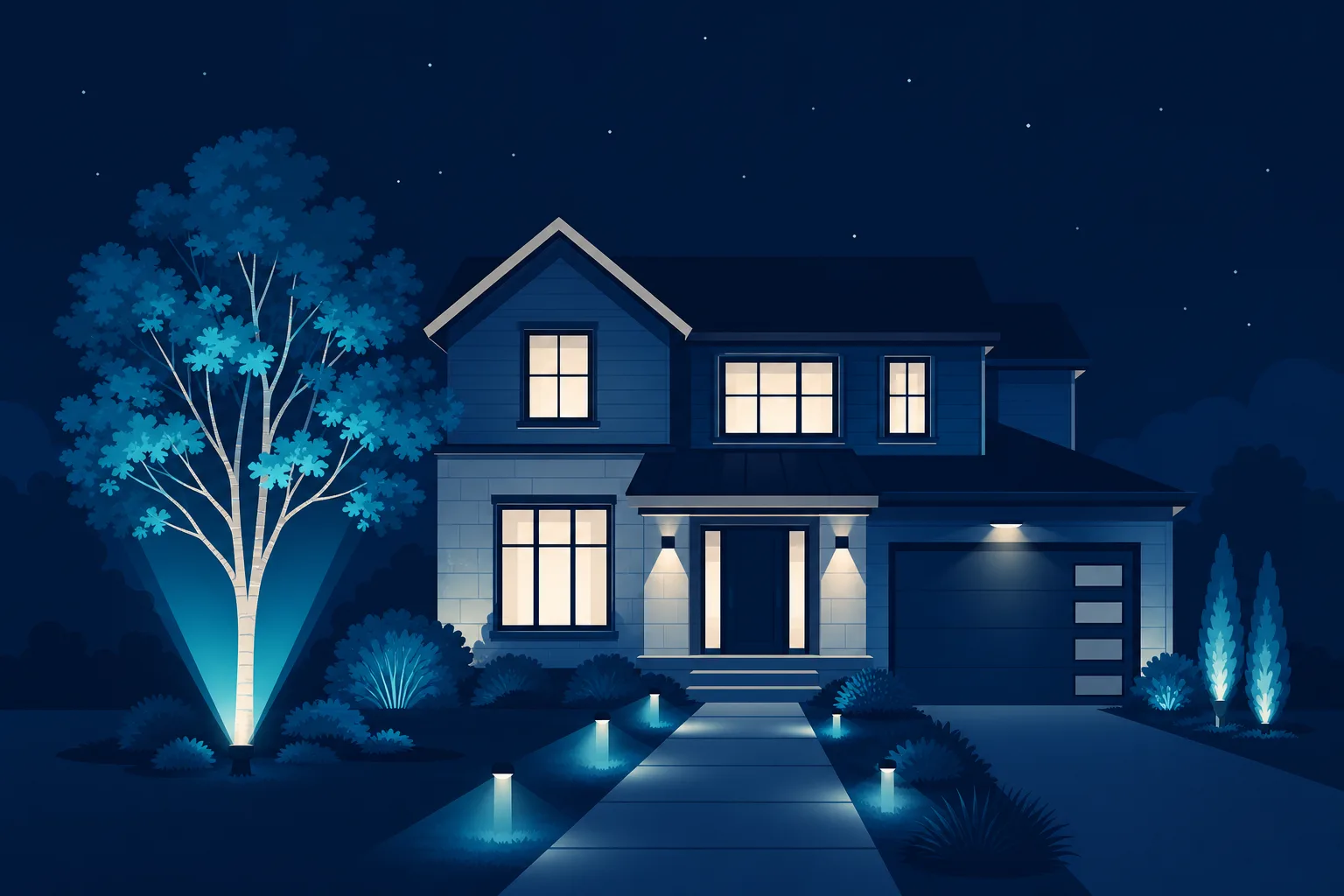
Your best work only exists after dark. A homeowner drives past a house you lit last month, sees the way the uplights wash the stone, the soft glow along the walkway, the tree canopy catching light from below, and thinks "I want that." Then they go home, open their phone, and search. If they cannot find you, or they find a website that looks like it was thrown together between jobs, that feeling fades and they move on.
This is a guide to building a website for a landscape lighting company that does one job well: it takes the magic of your night photos and turns it into booked design consults and installs. No jargon, no fluff. Just what actually matters for a business that sells something people have to see to believe.
Why most landscape lighting websites lose the sale
Landscape lighting is an emotional, visual purchase. Nobody wakes up needing it the way they need a working furnace. They buy it because a yard they saw looked stunning, or because they are tired of stumbling up a dark path, or because they want the house to feel safe and finished at night.
Here is where most sites fail:
- The photos are daytime shots or low quality. A daytime photo of a fixture in a flower bed sells nothing. Your product is the light itself, at night, in a real yard.
- They read like an electrician's site. Homeowners do not want to read about transformers and wire gauges. They want to see the transformation and trust the person behind it.
- There is no clear next step. A wall of services with no obvious "book my design consult" leaves the visitor to figure it out. Most will not.
- They compete on price. When your site says nothing about design skill, the visitor assumes every installer is the same and shops for the cheapest bid. That is a race you do not want to win.
Fix those four things and you are ahead of nearly every competitor in your area.
Put your night photos front and center
Your homepage should open with your strongest after-dark photo, full width, the moment the page loads. Not a stock image. Not your logo on a colored background. A real home you lit, at dusk or full dark, where the light does the talking.
A few things that make lighting photos sell:
- Shoot at dusk, not pitch black. That "blue hour" window right after sunset keeps a little color in the sky so the house reads as a home, not a floating set of lights. It is the single biggest quality jump you can make.
- Show the whole scene. Uplit trees, a grazed stone facade, path lights leading the eye toward the front door. A homeowner needs to picture their own yard, so give them a full composition, not a close-up of one fixture.
- Use before-and-after pairs. A dim, flat house next to the same house glowing at night is the most persuasive image you own. It shows the value in one glance.
If your photos are weak, that is the first thing to fix, before the website itself. A good phone camera on a tripod at dusk will beat most of what your competitors have. Take fifteen minutes at your next finished job.
The pages a landscape lighting website actually needs
You do not need twenty pages. You need a handful that each do a job.
Home
Lead with the night hero photo and one clear line about what you do and where. Then a short row of before-and-after pairs, a plain explanation of how working with you goes, a few reviews, and a big button to book a design consult. That is a complete homepage.
Gallery, organized by what people want lit
This is the heart of the site. Break it into the outcomes homeowners search for, not the fixture types you use:
- Front yard and curb appeal
- Trees and gardens
- Pathways, steps, and driveways
- Decks, patios, and outdoor living
- Pools and water features
- Security and safety lighting
When someone can click "trees and gardens" and see six gorgeous night shots, they start imagining their own yard. That is the moment a lead is born.
The design consult page
This page does the heaviest lifting, so it gets its own section below.
Service, warranty, and repairs
Lighting is not install-and-forget. Fixtures shift, bulbs age, landscaping grows over them, connections corrode. A page that explains your maintenance visits and warranty does two things: it reassures the buyer that you stand behind the work, and it opens a recurring revenue door with existing customers. Mention that you also service and rescue systems other companies installed. Plenty of people have a half-dead system and no one to call.
About and service area
A real photo of you or your crew, a few sentences on why you got into this, and a clear list of the towns you cover. Homeowners hiring someone to work around their home at night want to know who is showing up.
Sell the design consult, not a price
Your competitors put a phone number and hope. You are going to sell the design consult as the valuable, low-pressure first step it actually is. This is what separates a real lighting professional from someone who sticks a kit in the ground.
Explain plainly what the consult includes. For most lighting pros that is an evening visit where you walk the property, talk through what the homeowner wants to feel and highlight, and often set up a live demo, temporary fixtures placed and switched on so they can literally see the effect before committing. That demo is your closer. Nothing sells a lighting job like watching your own house light up in real time.
On the page, spell out:
- What happens at the consult and how long it takes
- That there is no obligation and no pressure
- That you handle the design, the fixtures, the wiring, and the cleanup
- What the follow-up looks like: a written plan and a clear quote
When the first step is "let me show you what your yard could look like" instead of "what's your budget," you attract people who care about quality and you stop bleeding leads to the lowest bidder.
Speak to curb appeal AND security, because buyers split into two camps
Landscape lighting buyers usually want one of two things, and the best sites speak to both without picking a side.
The curb appeal buyer wants their home to look expensive and finished. They care about the drama of an uplit oak, the warmth in the windows, how the house looks when guests pull up. Sell them beauty, mood, and pride of ownership.
The security and safety buyer wants no dark corners, safe steps, and a home that looks occupied and cared for. They care about not tripping on the path, about the side yard not being a black void, about deterring anyone who might case a dark house. Sell them safety, visibility, and peace of mind.
Give each its own short section on the homepage or a dedicated page. The same install often serves both, but a visitor needs to see their specific worry named before they believe you understand what they want.
Handle the objections before they are asked
A homeowner considering lighting has a few quiet doubts. Answer them right on the page and you remove the friction that kills bookings. A short FAQ near the bottom works well:
- "Will it look tacky or over-lit?" Explain your restraint, that good lighting is felt more than seen, warm tones, no runway effect, no harsh glare in the eyes.
- "How much does it cost?" You do not have to post prices, but acknowledge the question. Say that it depends on the size of the property and what they want lit, and that the consult gives them a clear, no-surprise quote.
- "Won't the bulbs constantly burn out?" Talk about modern low-voltage LED, long life, low running cost, and the warranty that backs it.
- "What about my existing landscaping and my lawn crew?" Reassure them you work around plantings and bury the wire cleanly so the mower is never an issue.
- "Can you fix the system the last company left me?" A clear yes here wins a whole segment of frustrated homeowners.
Every doubt you answer on the site is one fewer reason to close the tab.
Get found by people searching at night
You can have the most beautiful site in the state, but it has to show up when a homeowner searches. For local lighting work, a few things move the needle:
- Claim and fill out your Google Business Profile completely. Add your night photos there too. When someone searches "landscape lighting near me," the map results usually appear above everything else, and your profile is what shows.
- Name your towns on the site. A short line like "serving the north metro and surrounding suburbs," plus the actual town names on your service area page, helps you appear for those local searches.
- Ask happy customers for reviews right after the reveal. The moment their yard lights up for the first time is peak excitement. That is when a five-star review is easiest to get.
- Keep adding fresh night photos. New work on your gallery signals an active, real business to both homeowners and search engines.
If you do nothing else, get your Google Business Profile complete and loaded with dusk photos. It is the front door most of your leads walk through.
The fastest way to get a real site up
You have three honest paths.
Do it yourself on Wix or Squarespace. Doable if you have the evenings for it and a good eye. The catch is that a lighting site lives or dies on how the photos are presented, and getting a gallery to look premium takes real fiddling. Your time is probably worth more on a ladder.
Hire a web agency. You get a custom site and a professional to lean on, which is great, but it usually costs more up front and every future change means an email and a wait. When you finish a stunning job and want it on the site tonight, waiting a week hurts.
Use a done-for-you service built for local trades. This is where a tool like Saynovo fits. It generates your site around your Google Business Profile to start, and your night gallery and your design-consult offer were never in that profile, so here is the part that matters for a lighting company: you add them by talking to it. After a night shoot you can say "add these six photos to the front yard gallery and make the oak tree one the homepage hero," and it changes. No dashboard to wrestle, no waiting on a developer while your best work sits on your phone.
Whatever you choose, the priorities are the same: dusk photos front and center, the design consult as the clear next step, and both the curb appeal and security buyer spoken to directly.
Your next step
Pick your single best after-dark photo, the one that makes people say "wow." That image is the foundation of your whole site and your whole pitch. Then get a real page up that shows your work, sells the consult, and makes it dead simple to book.
If you would rather have that built for you and keep it current just by describing what you want changed, Saynovo can generate a landscape lighting site around your existing Google listing and let you talk the gallery and the packages into shape from there. Either way, stop letting your best work disappear at sunrise. Put it where the next homeowner can find it.