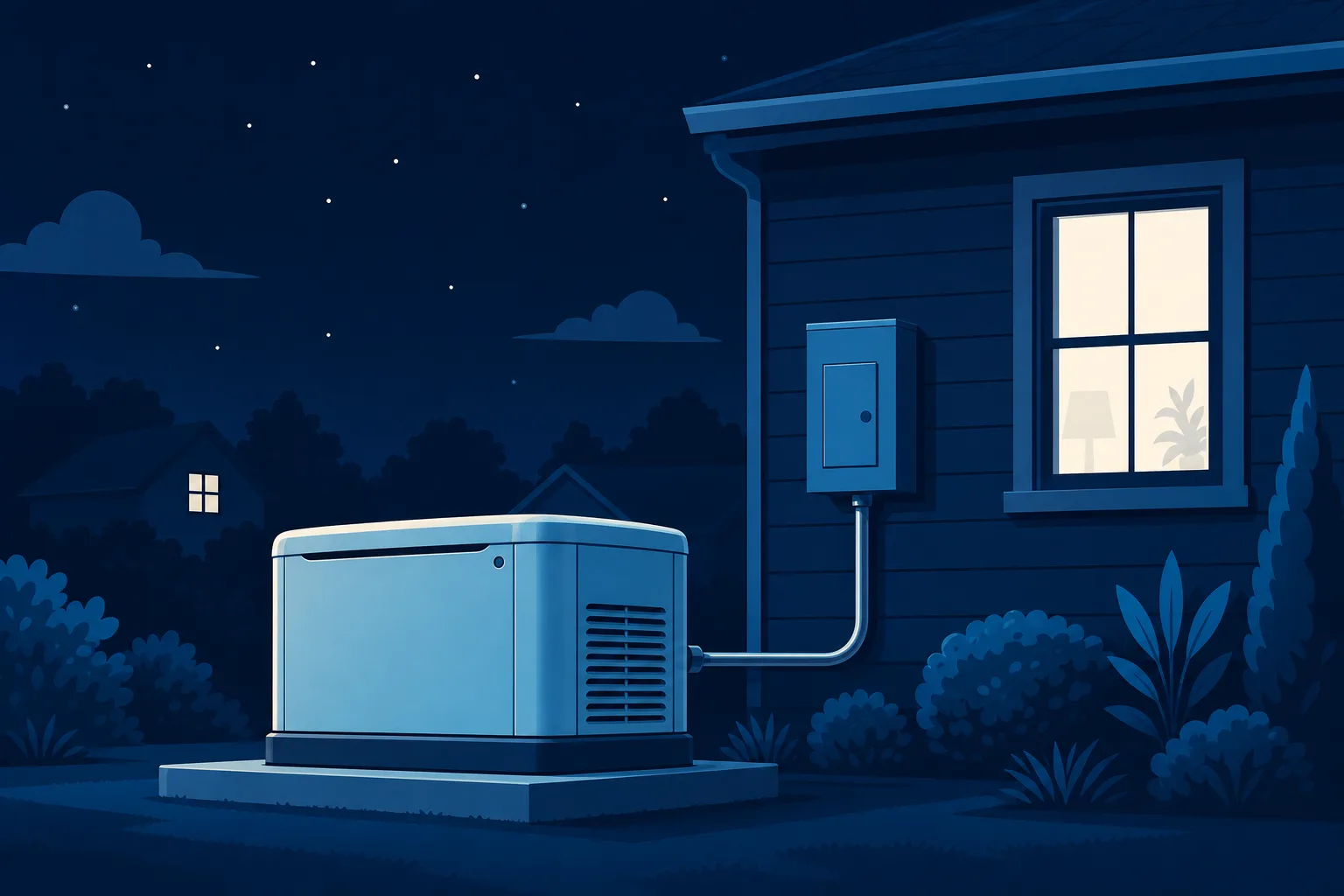
Standby generator work has a rhythm no other trade has. For weeks nothing happens. Then a line of storms rolls through, the power goes out for eighteen hours, and by Monday morning every homeowner on the block is typing "whole home generator installer near me" into their phone at the same time. The installers who win that week are not the ones with the best trucks. They are the ones whose website loads fast, answers the two questions every panicked homeowner has, and lets that homeowner book an estimate before they scroll to the next result.
This is a practical guide to building a website for a generator installer that does exactly that: catches storm-driven demand, handles the sizing and financing questions up front, and turns a nervous visitor into a booked in-home estimate. No jargon, no theory. Just what actually works for whole-home standby work.
Understand the homeowner who lands on your site
The person searching for a generator installer is not comparison shopping the way a homeowner shops for paint colors. They are usually a little anxious and a little embarrassed that they waited this long. Something happened. The freezer thawed during the last outage. A parent on oxygen was without power. The neighborhood got hit and theirs was the only dark house on the street.
They have three things running through their head, and your website needs to speak to all three in the first ten seconds:
- Will this actually keep my whole house running, or just a few things? They have heard about portable generators and extension cords and they do not want that.
- How much is this going to cost, and can I finance it? A whole-home standby unit plus installation is a real number, and they are bracing for it.
- How fast can someone come out and look? Storm-season urgency is real. If your site makes them wait, the next installer will not.
Everything below is built around answering those three questions before the homeowner has to ask.
Lead with the outcome, not the equipment
Most generator installer sites open with a photo of a gray metal box on a concrete pad and the brand name in big letters. That box means nothing to a homeowner. What they want is the feeling of the lights staying on while the whole street goes dark.
Your homepage headline should promise the outcome in plain words. Something like "Keep your whole house running through the next outage, automatically" beats "Authorized Whole-Home Standby Dealer" every time. Say what the homeowner gets: heat, refrigeration, medical equipment, well pump, and internet, all switching on by themselves within seconds, whether they are home or not.
Under that promise, put one clear button: Book a free estimate. Not "Learn more." Not "Contact us." The whole point of the site is that button, and it should appear again at the top, in the middle, and at the bottom of every page.
The photos that actually sell the job
Skip the stock photos. A homeowner can smell them. What builds trust for standby generator work is:
- A finished install shot: the unit set cleanly on its pad next to the house, tucked where it belongs, not an eyesore.
- The transfer switch mounted neatly by the panel, showing you do clean, code-correct electrical work.
- A wide shot of a lit-up house at dusk with the caption that it stayed on during an outage.
- Your actual crew and truck, so they know a real local team is showing up, not a call center.
One honest photo of your own completed work outsells ten polished stock images.
Answer the sizing question before they call
The single biggest thing that stalls a generator estimate is the homeowner not knowing what size unit they need. They have read that a generator is measured in kilowatts, they have no idea what that means for their house, and uncertainty makes people close the tab.
Give them a simple, no-math way to get oriented right on the site. A short "What size do I need?" section that groups homes into plain buckets does the trick:
- Essentials only - keeps the furnace or AC, fridge, a few lights, and Wi-Fi running. Good for smaller homes or tighter budgets.
- Most of the house - adds the well pump, water heater, and more circuits. The common choice.
- The whole house, no compromises - runs central air, electric range, and everything at once for larger homes.
Do not try to give an exact kilowatt number online. That is what the estimate is for, and being too precise on the website only creates arguments later. The goal is to move the homeowner from "I have no idea" to "I think I am probably a most-of-the-house family, let me have them come confirm it." That small shift is what gets the estimate booked.
Make the money conversation calm, not scary
A homeowner who is bracing for a big number will bail if your site hides pricing entirely, and will also bail if a giant figure is the first thing they see. The trick is to be honest and calm about it.
You do not have to publish a firm price, because the real number depends on the unit size, the gas line, the electrical panel, and the distance from the meter. But you can set expectations so nobody feels ambushed. Explain in plain terms that a whole-home standby install is a project with a few moving parts: the generator itself, the concrete or composite pad, the automatic transfer switch, the gas hookup, and the permit and inspection. That transparency alone separates you from the installers who dodge the topic.
Then put financing front and center. This is the part most generator sites bury, and it is the part that turns a "someday" into a "let us book it." A homeowner who sees that the whole thing can be a manageable monthly payment instead of one large check is far more likely to schedule. If you offer financing, give it its own short section with a headline like "Protect your home now, pay monthly," and put a Book a free estimate button right underneath it.
Build the pages that a generator buyer actually reads
You do not need a huge website. You need a handful of pages that each do a job:
- Home - the promise, the three questions answered, and the estimate button.
- Whole-home standby generators - what automatic standby means, how it differs from a portable unit, and why it turns on by itself.
- Our process - the estimate, the sizing, the permit, the install day, and the first test. Homeowners love knowing exactly what happens.
- Service and maintenance - standby units need annual service, and this page both reassures new buyers and brings in recurring revenue.
- Service area - the towns and counties you cover, so the homeowner three streets over knows you are local.
- Reviews - real customers, ideally ones who mention an outage where the generator came through.
That is it. A tight site that answers questions beats a sprawling one that buries them.
Turn storm season into booked work, not missed calls
Here is the hard truth about this trade: demand arrives in a flood, usually at night, usually when your office is closed. If the only way to reach you is a phone number that rings to voicemail after a big storm, you are handing booked estimates to whoever answers first.
Your website is what works while you sleep. Make the estimate request form dead simple. Name, address, phone, and one dropdown: "What made you start looking?" with options like recent outage, medical needs at home, new home, or planning ahead. That one question tells you how urgent the lead is before you even call back, so on a busy storm week you can triage the freezer-full-of-food emergencies first.
A few small touches make a big difference during a surge:
- A short banner you can switch on that says you are booking estimates and roughly how soon you can come out. Honesty about a two-week wait still beats silence.
- A confirmation message after the form that tells them exactly what happens next and when they will hear from you. Anxious people calm down when they know the plan.
- A mobile layout that works with one thumb in a dark house. Most storm searches happen on a phone.
Get found before the storm, not after
Ranking for "generator installer near me" the week of a storm is nearly impossible if your website was born that week. The installers who catch storm traffic built their pages months earlier. A few things help you show up when it counts:
- Claim and fill out your Google Business Profile completely, with your service area, real photos, and steady reviews. For local generator searches this is often more important than the website itself.
- Name your towns and counties in your page text the way locals say them, not just the region.
- Write one honest page about what standby generators actually do and do not do. It quietly answers the questions people search for and builds trust when they land.
- Ask every happy customer for a review right after their first successful outage. Those "it kept us running for two days" reviews are gold.
Do the boring groundwork in the calm weeks and you will be the house that is lit up in the search results when the next storm rolls through.
Two honest ways to get this site built
You have real options, and the right one depends on how much you want to touch it.
If you like tinkering and have a few weekends free, a DIY builder like Squarespace or Wix can get you a clean, decent site. You will handle the writing, the photos, the sizing section, and the estimate form yourself, and you will maintain it forever. That is fine if you enjoy that kind of thing.
If you would rather spend your time on installs than on web design, a done-for-you option makes more sense. This is where a tool like Saynovo fits the generator trade specifically: it imports what your existing Google Business Profile already holds, your name, hours, photos, and reviews, then generates a professional site around it, free for that first build. Sizing guidance, your installed price bands, and the towns you cover were never in that profile, so you add them by simply talking to it. You can say "add a financing section under the hero" or "put up a storm banner that says we are booking estimates two weeks out," and it changes. When a storm hits and you need to flip that banner on from your phone at 11pm, talking to your site beats logging into a builder and hunting for the right menu.
And if you want the whole thing handled with zero involvement, a fully-managed agency like SyntroAI (the team behind Saynovo) can run it for you end to end. Pick the level of hands-on that matches how you actually want to spend your week.
Your next step
You do not need a perfect website. You need one that loads fast, answers the sizing and financing questions, and puts a Book a free estimate button in front of a homeowner who just sat through a long, dark night. Start with your Google Business Profile, pick the buckets for your sizing section, decide how you will present financing, and get that estimate form live before the next storm season.
Do that, and the next time the lights go out across town, yours is the site that turns a nervous search into a booked estimate on your calendar.