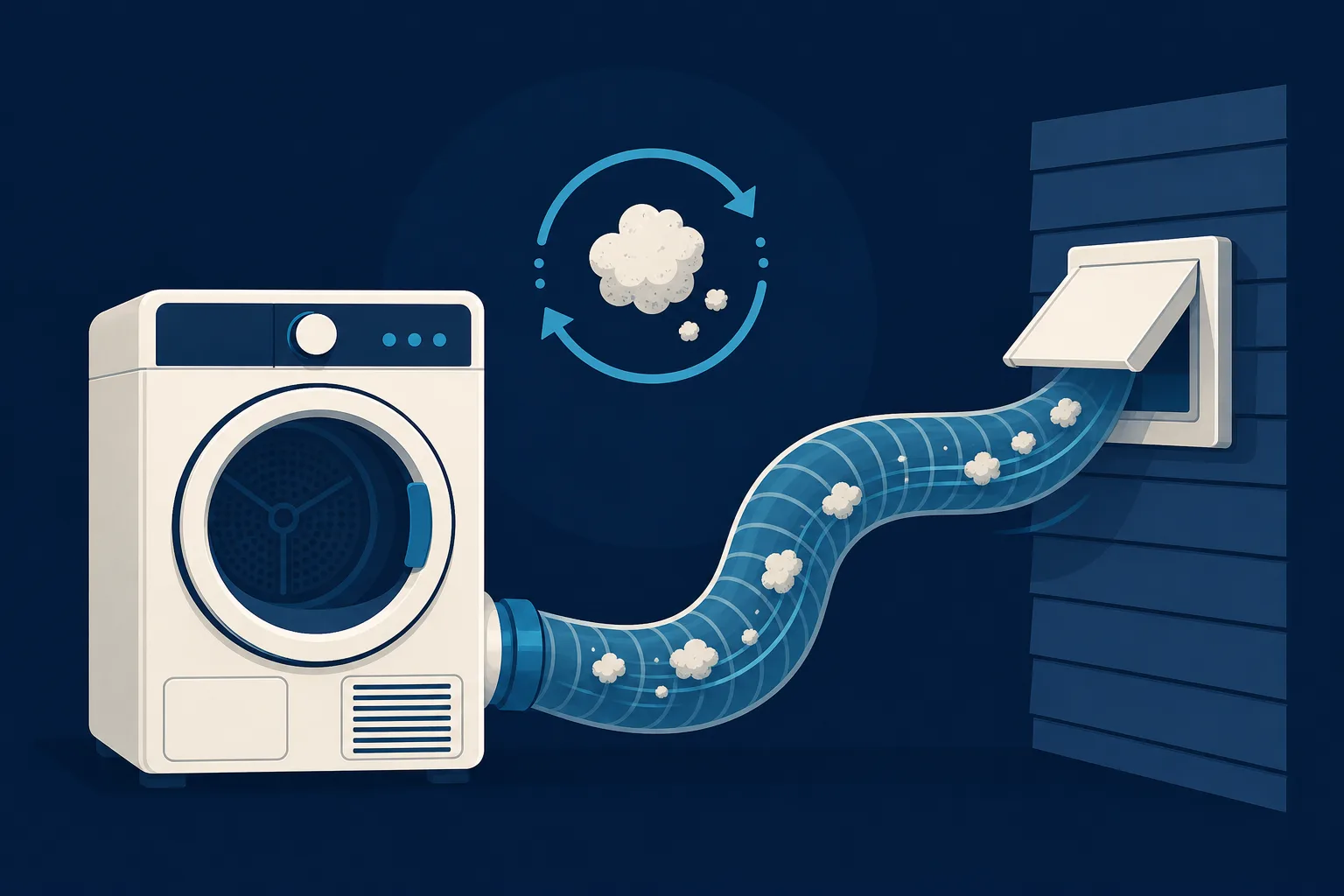
Most dryer vent cleaning jobs are small. Two hours in a house, maybe a lint trap full of enough fluff to stuff a pillow, and a homeowner who is genuinely relieved because they finally did the thing they had been putting off for three years. Good money for the day. But here is the trap: if that homeowner forgets you exist, they will not think about their dryer vent again until 2029, and by then a competitor with a shinier van might get the call.
The whole game in this trade is turning a one-time cleaning into a customer who comes back every year, and referring the neighbor while they are at it. Your website is the engine that does that quietly in the background. If you want to build a website for a dryer vent cleaning business that books recurring jobs, you do not need a giant site. You need a small, sharp one built around three things: fire safety, a dead-simple booking button, and a system that reminds people it is time to clean again.
Let me walk you through exactly what to build.
Why a dryer vent cleaning website is different from a plumber's
A plumber gets found in a panic. Something is flooding, so the customer types "emergency plumber near me" and calls the first three results. That is reactive, high-urgency work.
Dryer vent cleaning is the opposite. Almost nobody wakes up in a crisis about their dryer vent. Your customer is calm, a little nervous, and thinking something like "my clothes take two cycles to dry" or "I read that lint causes house fires." They are researching, not panicking. That changes everything about your site.
It means your website has to do the job a salesperson would do:
- Explain why a clogged vent is actually dangerous, not just annoying.
- Show them you are legit, insured, and not going to make a mess in their laundry room.
- Make booking so easy they do it right now, before they close the tab and forget.
- Get their email or phone so you can remind them next year.
A site that only lists your services and a phone number leaves all four of those jobs undone. That is the gap you are closing.
Lead with the fire-safety angle, because that is what actually sells
Here is the number that does the heavy lifting on your homepage: clogged dryer vents cause thousands of house fires every year, and the vast majority of those are because the vent was never cleaned. You are not selling a cleaning. You are selling peace of mind and a lower chance of a fire in the wall behind the dryer.
Say it plainly, near the top:
Lint is the number one cause of dryer fires. If your dryer takes two cycles to dry a load, runs hot to the touch, or you cannot remember the last time the vent was cleaned, it is time.
Notice that this does two things at once. It scares a little, honestly, and then it hands the reader a simple self-check they can do standing in their own laundry room. Those three symptoms, longer drying times, a hot dryer, and no memory of the last cleaning, are the exact things your customer is quietly worried about. Put them in words on the page and the reader thinks "that is me."
Then back it up with proof they can trust:
- A line noting you follow the standard of cleaning vents at least once a year.
- A mention that you are insured and background-checked, because they are letting you into their home.
- One or two sentences about the mess-free process, drop cloths, shoe covers, and a full cleanup so their laundry room is spotless when you leave.
You are answering the unspoken objection: "Is this a real safety thing, or are you just upselling me?"
The pages you actually need (and the ones you can skip)
You do not need fifteen pages. You need a handful that pull their weight.
Homepage
This is your whole pitch in one scroll. Symptoms self-check, the fire-safety hook, a big booking button, before-and-after photos, a few reviews, and your service area. If someone reads only this page, they should know exactly what you do and how to hire you.
Book Now or Get a Quote
This is the most important page on the site and I will cover it in its own section below. Do not bury it. It should be reachable from a button on every screen.
Services
Keep it concrete. List what you handle and roughly what each involves:
- Standard dryer vent cleaning for a house
- Long or rooftop vent runs (the ones other companies dodge)
- Bird nest and blockage removal
- Multi-unit and condo buildings, if you do them
- Dryer vent inspections with photos
Naming the hard jobs, like rooftop and long runs, quietly tells the reader you are the pro, not a guy with a leaf blower.
About and Service Area
Who you are, your van, your face, the towns you cover. Local buyers hire people, not logos. A real photo of you next to your truck beats any stock image.
Reviews
Pull your best Google reviews onto their own page. For this trade, the reviews that convert best mention a clean, respectful, no-mess visit and a technician who explained what he found.
You can skip a blog for now, skip a long history page, and skip anything that does not help someone either trust you or book you.
Make booking a one-tap decision, not a phone tag game
Your customer is often a busy homeowner who does not want to call during business hours and talk to a stranger. The single biggest upgrade you can make is letting them book online in under a minute.
A strong booking flow for dryer vent work looks like this:
- A short form: name, address, phone, and what kind of dryer setup they have.
- A simple question about the dryer location, first floor, second floor, or roof vent, so you can quote and plan the day.
- The option to pick a time slot from your real availability, or request a callback if they prefer.
- An instant confirmation by text or email so it feels handled.
That address and dryer-location question matters more here than in most trades. A ground-floor vent is a quick job. A third-floor unit with a rooftop termination is a different price and a different amount of time on the ladder. Asking up front means fewer surprises for both of you.
If you would rather not run a full self-scheduling calendar yet, even a clean quote-request form that lands in your phone as a text is a massive step up from "call us." The goal is to catch the customer in the exact moment they decide, because if they have to wait until Monday to call, half of them never do.
The recurring-job system is where the real money is
This is the part almost every dryer vent site gets wrong, and it is the whole reason you are reading this.
A dryer vent should be cleaned about once a year, more often for big families or homes with pets. That means every single customer you clean today is a job waiting to happen twelve months from now. But only if you remember them, and only if they remember you. Left to chance, they will not.
Build the reminder loop into how you work:
- Capture the email and mobile number at booking. No email, no reminder, no repeat job. This is non-negotiable.
- Set an automatic reminder about eleven months out. A short, friendly message: "It has been almost a year since we cleaned your dryer vent. Want us to get you back on the schedule before the busy fall season?"
- Offer an annual plan. Some homeowners will happily agree to "put me down for every spring" so they never have to think about it. That is recurring revenue you can count on.
- Time your outreach to the seasons. Fall is your peak. People run the dryer more as it gets cold, and holiday guests mean more laundry. A reminder that lands in late summer, before everyone else is booked solid, wins the fall calendar.
Think about what a single loyal customer is actually worth. One cleaning a year for eight years, plus the two neighbors they refer because you texted at the right time, is worth far more than the one job you did this afternoon. The website and the reminders are what quietly turn that first cleaning into eight.
You can run this with dedicated field-service software like Jobber or Housecall Pro, which handle scheduling, invoicing, and automated reminders in one place and are worth a look if you are growing a crew. The important thing is that the reminder system exists at all, wherever it lives.
Photos that prove the danger and the payoff
Dryer vent work is invisible, which is a problem and an opportunity. The customer never sees inside the wall, so you have to show them.
The photos that sell:
- Before and after of the lint. A vent packed solid with grey lint next to the same vent clean and clear. This is your single most persuasive image. It is a little gross, and that is exactly why it works.
- A pile of what came out. The overflowing bag of lint from one house makes the danger real in a way words cannot.
- A bird nest or a crushed vent. Blockages people would never guess were there.
- Your gear and your process. The drop cloth down, the vacuum hooked up, shoe covers on. It signals a clean, professional visit.
Use your phone, shoot in good light, and keep it real. Homeowners trust honest, slightly messy real photos far more than polished stock images that could be anyone.
Get found on Google without spending a fortune
Most of your work comes from your town, so local search is where you fight. Two moves matter most.
First, your free Google Business Profile. Fill it out completely, list your service area, add your before-and-after photos, and ask every happy customer for a review. Those reviews and that profile are often what actually shows you in the map results when someone searches "dryer vent cleaning near me."
Second, your website should say your towns in plain words. Phrases like "dryer vent cleaning in" your city and the surrounding suburbs, worked naturally into your homepage and service area page, help Google understand where you work. You do not need to stuff keywords. You need to be clearly, specifically local.
A tip that pays off here: if you already have a Google Business Profile, a done-for-you tool like Saynovo can import it and generate a full website around what is already there, your name, reviews, service area, and photos, so you are not staring at a blank page trying to write your own site from scratch.
Should you build it yourself or have it done for you?
Be honest about your time. You are on ladders and in laundry rooms all day. Your evenings are for family and invoicing, not fighting with a website builder.
- If you enjoy the tech and have the hours, a DIY builder like Wix or Squarespace can get you a decent site for a low monthly cost. You will do the writing, the layout, and the booking setup yourself.
- If you want it handled, a done-for-you option builds and maintains the site for you. Saynovo, for example, lets you change anything on your site just by saying it out loud, so when you add rooftop vent service or want to push a fall special, you say what to change and it changes, no dashboard wrestling. The parent agency, SyntroAI, can take over the whole thing if you would rather never touch it.
- If you want deep custom work and have a real budget, a local web agency or a WordPress developer can build something bespoke, though it costs more and takes longer.
There is no wrong answer. The wrong move is having no real website at all, or one that cannot take a booking, while a competitor down the road quietly signs up your would-be repeat customers.
Your next step
Start with the one thing that changes your revenue the most: capture every customer's email and set up a reminder for next year. Even before the perfect website exists, that single habit turns one-time cleanings into a business that books itself.
Then build the small, sharp site around it. Lead with fire safety, show the lint, make booking one tap, and remind people every fall. Do that and your website for a dryer vent cleaning business stops being a brochure and starts being the thing that keeps your calendar full year after year.
If you already have a Google Business Profile, the fastest way to see what your site could look like is to import it and let it build the first version for you, then adjust from there. That gets you off zero today, which is the only step that actually matters.