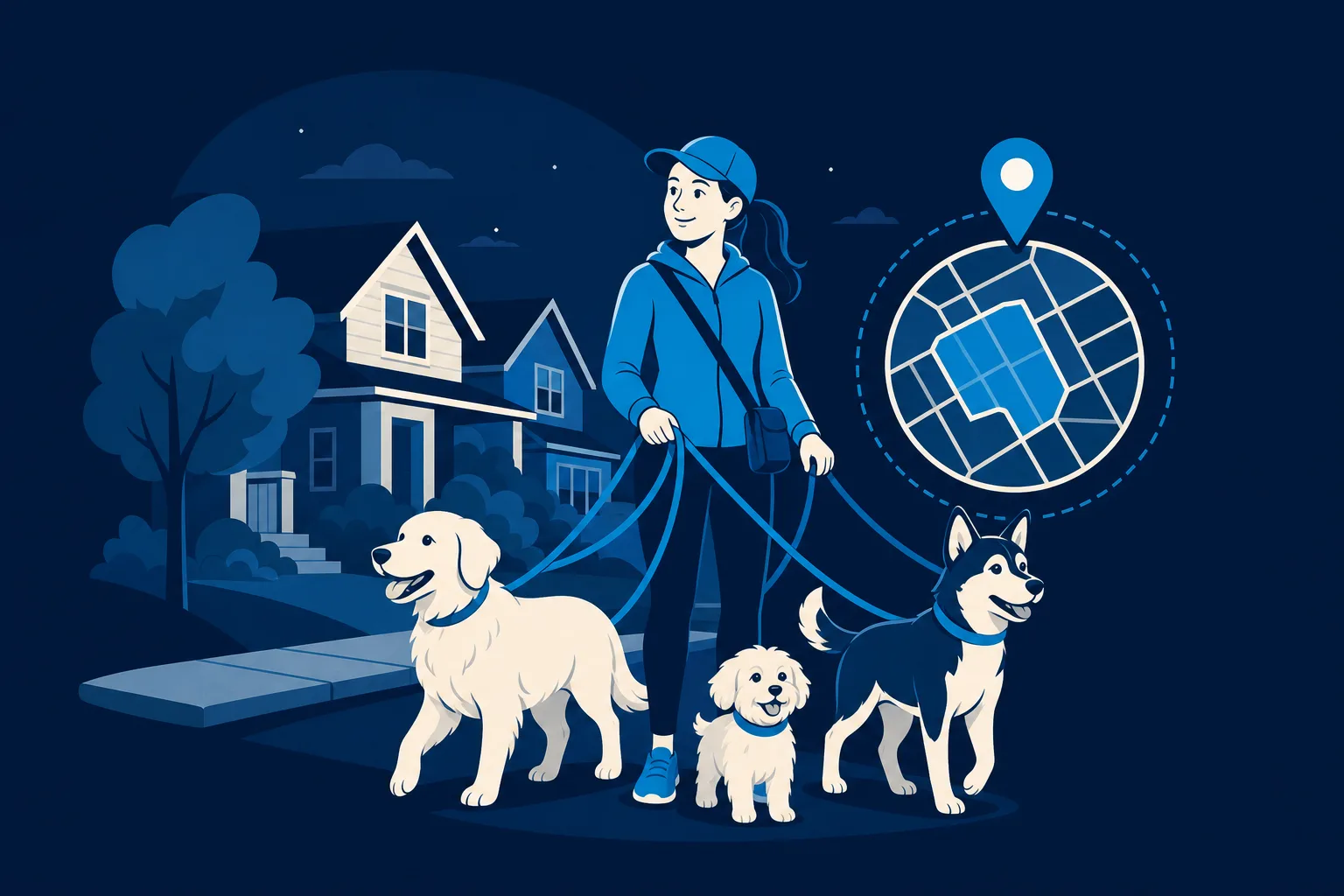
A dog walking business does not really run on one-off jobs. It runs on the same dogs, the same doors, the same times, week after week. The client who books you every Tuesday and Thursday at 11 is worth more than fifty people who message once and vanish. So when you build a website for a dog walker, the whole job is not to look busy or fill a page. The job is to turn a nervous pet parent handing over a house key into a standing account on your calendar.
That is a different goal than most small business sites. Most home services want the phone to ring. You want a stranger to trust you with their front door, their alarm code, and the animal they love most. Your website is where that trust either starts or dies. This guide walks through exactly what to put on it, in what order, so a first-time visitor gets to the one action that matters: requesting a meet-and-greet.
You do not need a website already, and you do not need to be technical. If you have never had a site in your life, that is fine. Start here.
Why a dog walker needs a real website, not just an app profile
Plenty of walkers start on Rover or Wag and think that is enough. Those platforms are fine for a first client or two, but they own the relationship, take a cut of every walk, and constantly show your client other walkers right next to your name. You are renting attention on someone else's shelf.
Your own website does three things a marketplace profile cannot:
- It lets you sell recurring packages on your terms instead of per-walk pricing set by an app.
- It shows up when a neighbor searches "dog walker" plus your town, so you catch people the apps never send you.
- It makes you look like a real local business, not a gig worker, which is exactly the feeling a client needs before they leave a key under the mat.
You will still take referrals and word of mouth. A website just gives every one of those referrals a place to land, look you over at 10pm, and decide you are the one.
Lead with the two things every pet parent is scared about
Before a single word about walk lengths or pricing, your homepage has to answer the two fears sitting in the back of every dog owner's mind. Get these wrong and nothing else on the page matters.
Fear one: is this person safe in my home? You are asking for access to their house, often when they are at work and the dog is home alone. This is the insured-and-bonded question, and it belongs at the top, not buried on a policies page.
Fear two: will my dog actually be okay with them? Some dogs are anxious, reactive, old, on medication, or terrified of strangers. The owner needs to believe you can handle their specific animal, not a generic golden retriever.
Answer both above the fold. A clean homepage headline plus one line that says something like "Licensed, insured, and bonded. Every new dog starts with a free meet-and-greet." does more work than any stock photo of a happy lab. You are telling them, in the first three seconds, that you take the scary parts seriously.
Make insured-and-bonded mean something
Every dog walker's website says "insured and bonded." Because everyone says it, it has stopped meaning anything. Your job is to make it concrete so it actually lowers the fear instead of washing over the reader.
Spell out what each word protects them from, in plain terms:
- Insured means if your dog is hurt on a walk, or if something in the home gets damaged while you are there, there is coverage. It is not on the owner.
- Bonded means they are financially protected in the rare case of theft. You are trusted with a key, and a bond backs that trust up.
- Licensed where your city or state requires it, so you are operating like a legitimate business, not off the books.
If you carry a specific policy, name the coverage in a simple sentence. If you are certified in pet first aid or CPR, put the badge right next to the insurance line. These are the exact details a careful owner is quietly checking for, and most walker sites never provide them. Providing them is how you stand out without saying a word about being better.
Sell recurring packages, not single walks
Here is where a dog walker site should look very different from, say, a plumber's. A plumber sells one urgent visit. You sell a rhythm. Your pricing section should make the standing weekly client the obvious, easy choice and make the one-off walk feel like the expensive exception.
Structure your offer around commitment, not just duration:
- A weekly package. Two, three, or five walks a week at a set time, billed as a bundle. This is your bread and butter and should be the most visible option.
- A daily midday walk. For the nine-to-five owner whose dog cannot hold it until 6pm. Frame it as the fix for a specific daily problem.
- The occasional or drop-in walk. Available, but clearly the pricier per-walk path, so the math nudges people toward a package.
You do not have to publish exact dollar amounts if you would rather quote after a meet-and-greet. Many walkers prefer "packages starting from" or "request a rate sheet." What matters is that the visitor understands you are looking for a regular spot in their week, not a single transaction. That framing is what fills a route.
Add a short line about how billing works: paid ahead for the month, or per week, cancel or pause with a day's notice. Predictable money is the whole point of a walking business, and saying so plainly attracts the kind of client who wants a predictable arrangement too.
Own a tight service area and say the streets out loud
Dog walking is a radius business. You cannot walk a 3pm dog forty minutes across town and still make a 3:30 in the other direction. Your ideal route is dense: a cluster of homes close enough that you are on foot or a two-minute drive between them. Your website should protect that reality, not fight it.
Name your service area with real specificity. Do not say "the greater metro area." Say the neighborhoods, the zip codes, the apartment complexes, the parks you already walk near. A visitor scanning the page wants to instantly see their own street and think "she already works right here."
This does three things at once:
- It reassures a nearby client that you are truly local and reliably close.
- It gently screens out the far-away inquiries that would wreck your schedule.
- It helps you show up on Google when someone searches for a walker in that exact neighborhood.
If you cover a few distinct pockets, list them clearly. A tight, honest service area reads as more professional than a vague promise to go anywhere, and it means every client you sign fits cleanly onto a route you can actually walk.
Make the meet-and-greet the one clear next step
This is the single most important design decision on the whole site. A dog walker's website should not push "Book Now." Booking a stranger to walk your dog sight unseen is a leap almost no careful owner will make. The right first step is a free meet-and-greet: you come over, meet the dog, see the home, learn the routine, and both sides decide if it is a fit.
Frame the meet-and-greet as the easy, no-pressure, no-cost first move. It lowers the stakes completely. The owner is not committing to months of walks, just a short introduction. And you know that once you have knelt on someone's living room floor and their dog has climbed into your lap, the walking arrangement usually follows on its own.
So every call to action on the site points to that one thing. Not a phone tree, not a long form, not an instant checkout. A short request:
- The dog's name, breed, and age.
- The home neighborhood.
- What kind of schedule they are hoping for.
- A good time for you to come by and meet.
Keep the form to a handful of fields. Every extra box you add is another reason a busy person closes the tab. You can gather the alarm code and the vet's number after they have decided to hire you, never before.
The handful of pages that actually matter
You do not need a sprawling site. A dog walker converts on a small, focused set of pages, each doing one job.
- Home. The trust line, the recurring-walk promise, the service area, and a big meet-and-greet button.
- Services and packages. The weekly bundles, the midday walk, the drop-in option, and how billing works.
- About you. This page carries more weight than for almost any other trade. People are hiring a human to be alone in their home with their dog. Show your face, say why you do this, mention your own dogs, and note any pet first-aid training. Warmth beats polish here.
- Reviews. Short quotes from real neighbors, ideally naming the neighborhood and the dog. "She has walked our anxious rescue every weekday for a year" is worth more than any adjective you could write about yourself.
- Contact and meet-and-greet request. The simple form, plus your phone number for the people who would rather just call.
If you have no reviews yet because you are brand new, that is okay. Ask your first two or three clients for a sentence each, and put a friendly line up in the meantime about being newly launched and offering meet-and-greets to introduce yourself to the neighborhood.
Photos: your own dogs, your own streets
Skip the stock photography. A pet parent can smell a generic smiling-labrador photo instantly, and it quietly tells them you are hiding. The photos that build trust are the specific, real ones:
- You, on an actual walk, holding a real leash, in a place a local will recognize.
- Dogs you genuinely walk, if their owners are happy to be featured.
- The parks, trails, and sidewalks in your service area.
- One clear, friendly headshot on your About page so a stranger can put a face to the name before they open the door.
You do not need a photographer. A recent phone can take everything on this list. Good light and a real dog beat an expensive camera and a fake one every time.
Where Saynovo fits for a busy walker
If you are out on a route most of the day, building and fiddling with a website is the last thing you want to spend an evening on. This is exactly the case Saynovo was built for. If you already have a Google Business Profile, Saynovo can import it and generate a complete dog walker website around it, free for your first build, service area and all, so you are not starting from a blank screen.
The part walkers tend to like most: you edit the site by talking to it. When you finally lock in your weekly package pricing, or you add a new neighborhood to your route, or a client sends a photo you want on the reviews page, you just say what you want changed and it changes. No dashboards to learn between walks. If you would rather hand the whole thing off and never touch it, SyntroAI, the agency behind Saynovo, can run it for you end to end.
That said, be honest with yourself about what you want. If you enjoy tinkering and have the time, a builder like Wix or Squarespace can absolutely get a walker online. The question is only whether you would rather spend that time with your hands on a leash instead of a keyboard.
Your next step
You do not need a huge site or a big budget to fill your route. You need a page that answers the two fears fast, sells the weekly package over the one-off walk, names your streets, and makes the free meet-and-greet the one easy thing to click.
Start with that. Write the trust line, list your packages, and put up the meet-and-greet request. Get it in front of the neighbors who already have dogs and already need a midday walker. The standing Tuesday-and-Thursday clients, the ones who quietly renew month after month and refer the whole block, come from exactly that page doing exactly that job.