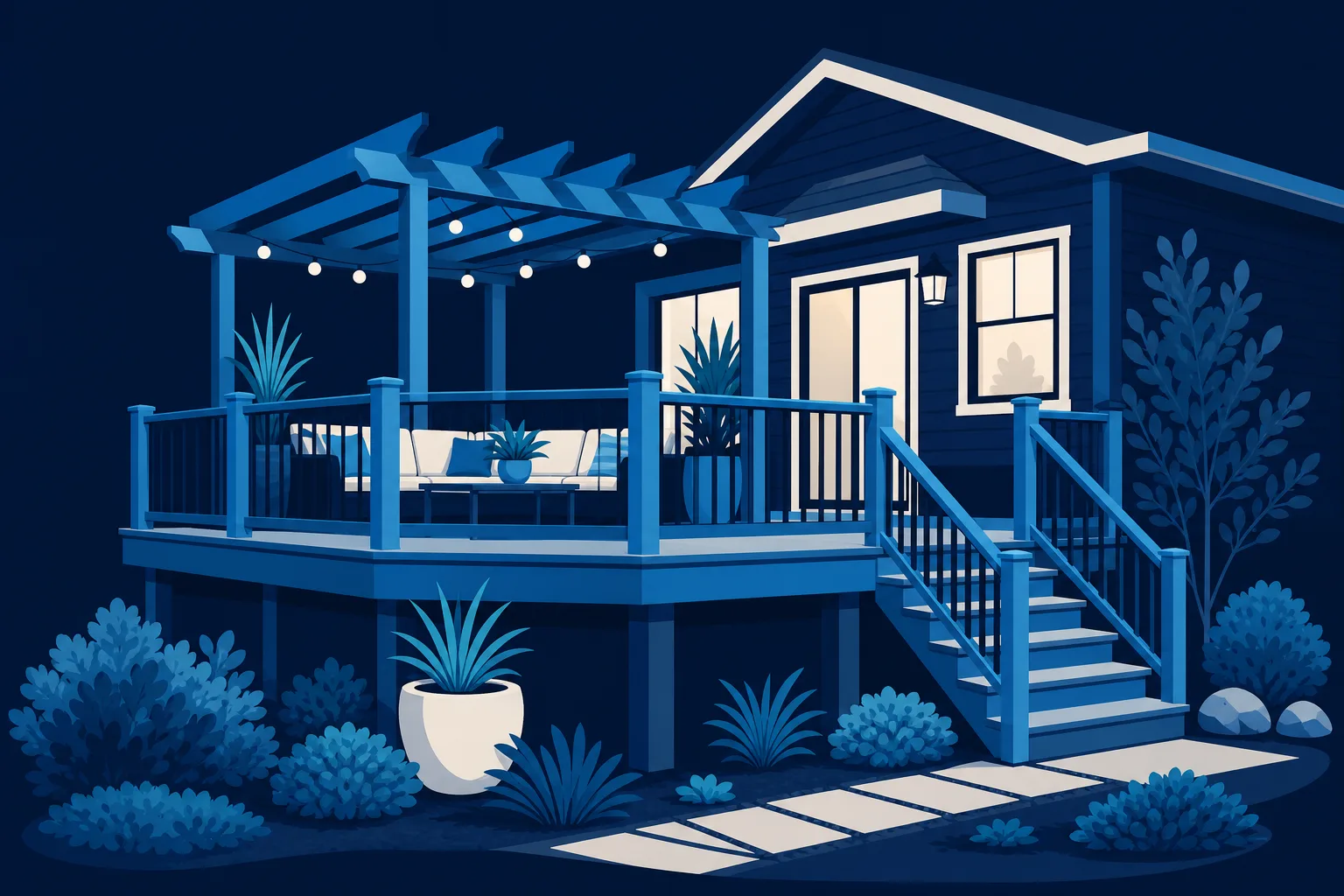
A deck is not an emergency purchase. Nobody wakes up at 2am needing one. Instead, a homeowner spends weeks staring at a bare patch of yard, saving photos on their phone, arguing with their spouse about wood versus composite, and quietly wondering what the whole thing will cost before they ever pick up the phone.
That slow, research-heavy buying process is exactly why a website matters so much for a deck builder. Your future customer is going to do their homework online whether you help them or not. If you build a website for a deck builder that answers the questions they are already asking, you become the contractor they trust before the first conversation even happens. This guide walks through how to build that website, even if you have never had one before.
Start with the one thing a deck buyer wants to see: your finished work
Roofing and plumbing are invisible once the job is done. A deck is the opposite. It is a showpiece the homeowner will stand on, host on, and look at every single day. So the single most important part of your website is a gallery of decks you have actually built.
Not stock photos. Not the manufacturer's glossy catalog shots. Your work, in real backyards, in your area.
Make the gallery the center of gravity for the whole site. A homeowner who lands on your page should be able to scroll through 15 or 20 real projects within a few seconds of arriving. Here is what turns a plain photo dump into a gallery that books projects:
- Group by style, not by date. People shop by look. Organize into categories like ground-level decks, raised decks with stairs, multi-level decks, decks with built-in benches or planters, decks with pergolas, and pool decks. A buyer who wants a two-tier deck can find three of yours in one click.
- Label the material and color. Under each photo, note whether it is pressure-treated wood, cedar, or a composite brand and color. Buyers are trying to picture their own choice, and this quietly teaches them the vocabulary they will use when they call you.
- Show one detail shot per project. A wide shot sells the vision. A close-up of the railing joint, the hidden fasteners, or the clean fascia board sells the craftsmanship. Buyers who care about quality are looking for exactly these details.
- Include a few in-progress photos. A framed-out deck before the boards go down proves you build a proper structure underneath, not just a pretty surface. That reassures the careful shoppers.
If you only have a handful of projects because you are just starting out, that is fine. Five strong, well-photographed decks beat fifty blurry ones. Shoot them in good light, from a few angles, and let quality carry it.
Give wood and composite their own pages
This is the fork in the road for almost every deck customer, and it is where you can be genuinely helpful instead of generic. Most homeowners come in leaning one way but not really understanding the tradeoffs. A deck builder website that lays this out clearly does something powerful: it makes you the honest expert instead of the salesperson.
Create a dedicated page or clearly separated sections for the material choices. Walk through them the way you would at a kitchen table.
The wood page
Cover pressure-treated pine, cedar, and any premium hardwood you offer. Be straight about it:
- Lower upfront cost, which matters to a lot of buyers.
- The look and feel of real wood, warm and natural.
- The maintenance reality: cleaning, staining or sealing every couple of years, and the fact that boards can warp, crack, or splinter over time.
- Roughly how long it lasts with good care in your climate.
The composite and PVC page
Cover the composite and capped-PVC brands you install, and name them, because buyers search for brands by name.
- Higher upfront cost, lower lifetime maintenance.
- No staining or sealing, just an occasional wash.
- Fade and stain resistance, and how the warranties work.
- The wide range of colors and board styles, which pairs perfectly with linking back to composite decks in your gallery.
End each page with a short, honest "which is right for you" summary. Something like: choose wood if upfront budget is the priority and you do not mind seasonal upkeep; choose composite if you want to spend your weekends on the deck instead of maintaining it. When you give buyers a clear framework instead of a hard push, they trust the recommendation, and they call.
Explain permits and your process so the project stops feeling scary
Here is a fear that kills more deck projects than price: the homeowner is quietly afraid the whole thing will become a mess. Permits they do not understand. An HOA that says no. A crew that tears up the yard and disappears halfway through. A project that drags into the fall.
A page that walks through your process, start to finish, removes that fear better than any discount could. Lay out the real steps in plain language:
- The first visit and measurement. What happens when you come out, how long it takes, and that they get a clear written quote.
- Design and material selection. How you help them lock in the layout, material, and color.
- Permits and approvals. This is the big one. Explain, in a friendly way, that most decks over a certain height or size need a building permit, that you handle pulling it, and that inspections are a normal, good thing that proves the deck is built to code. If you also deal with HOA architectural approvals, say so. Homeowners have no idea how any of this works, and a builder who calmly handles it looks like a pro.
- The build and the timeline. How many days a typical deck takes, how you protect their yard, and what daily cleanup looks like.
- The final walkthrough and warranty. What they can expect at the end, and what your workmanship warranty covers.
You do not need to write a legal document. A homeowner reading this should come away thinking one thing: this person has done this a hundred times and nothing is going to surprise me. That feeling is what converts a nervous browser into a signed contract.
While you are at it, add an FAQ that hits the questions you answer on every single call. Do you require a deposit? Do you work in the winter? Can you tie into an existing patio door? Do you remove the old deck? Answering these in writing saves you time and pre-qualifies the people who reach out.
Use the seasons to create real booking urgency
Deck building has a rhythm, and your website should ride it instead of ignoring it. In most of the country, everyone wants their deck finished by Memorial Day, which means the smart homeowners are booking in late winter and early spring. The ones who wait until the first warm Saturday in May are shocked to hear you are booked into July.
Put that reality on your site, honestly and helpfully:
- A short line near your call to action about your current booking window. Something like: we are currently booking projects three to four weeks out, reserve your spring build now. Real scarcity from a real schedule is the most honest urgency there is.
- Seasonal framing in your copy. In January and February, talk about beating the spring rush and having the deck ready for summer. In late summer, pivot to fall builds and getting it done before the holidays. A website that speaks to the season the visitor is actually in feels current and alive.
- An off-season angle. If you build through the colder months, say so, because most homeowners assume you cannot. Winter and early-spring projects mean their deck is ready the moment the weather turns, and it fills the slow part of your calendar. That is a win for both of you.
The goal is to gently move the "someday" homeowner off the fence and onto your schedule while the slots still exist.
Make it effortless to reach you, from a phone, in the backyard
Most people will look at your site on their phone, often while standing in the exact backyard they want to transform. So the path from "I like this" to "I contacted them" has to be short and obvious.
- A tap-to-call button that follows them down the page. No hunting for the number.
- A simple quote request form that asks only what you need to give a rough answer: name, phone, town, and a couple of lines about the project. Every extra field costs you leads. A photo upload option is a nice touch, since deck buyers love showing you their space.
- Your service area, spelled out by town. Deck buyers want to know you actually work where they live. List the towns and neighborhoods you serve so both they and Google understand your coverage.
- Real reviews near the buttons. A few genuine quotes from past customers, ideally mentioning cleanliness, staying on schedule, and how the finished deck looks, do more to earn the call than any claim you make about yourself.
What this looks like when it comes together
Picture the finished site. A homeowner searches for a deck builder in their town on a cold February evening. They land on your page and immediately scroll a gallery of real local decks, grouped by style. They click into your composite page and finally understand why the neighbor's deck cost what it did. They read your process page and relax when they see you handle the permit. They notice you are booking three weeks out and realize they should not wait. They tap the call button while sitting on their couch.
That is a booked project, and it happened because the website did the selling before you ever spoke.
Getting it built without becoming a website project yourself
You are a builder, not a web designer, and the last thing you want is to spend your evenings wrestling with a page editor when you could be quoting jobs. You have a few honest paths:
- A DIY builder like Wix or Squarespace works if you have the patience and a free weekend to learn it, and you are comfortable maintaining it yourself.
- A local web designer or agency works if you want a custom build and have the budget for it. If you would rather hand off your entire online presence and never think about it, a fully managed agency like SyntroAI can run the whole thing for you.
- A done-for-you tool works if you want the result without the learning curve.
That last path is where Saynovo fits. If you already have a Google Business Profile with a few deck photos on it, Saynovo can generate a complete, professional website around it, free for your first build, then you shape it into the gallery-driven, season-aware site described above. The part deck builders like most: when spring booking gets tight and you want to change your homepage to say "booking July projects now," you just say it out loud and the site updates. No dashboard, no waiting on a developer, no evening lost to fiddling with a page. You talk, it changes, and you get back to building decks.
Your next step
You do not need the whole site perfect on day one. Start with the two things that book projects: a gallery of your best real decks, and a clear page that answers wood versus composite honestly. Add the process-and-permit explainer next, then layer in your seasonal booking message. Do those in order and you will have a website that works the way your business does, filling the schedule before the warm weather even arrives.