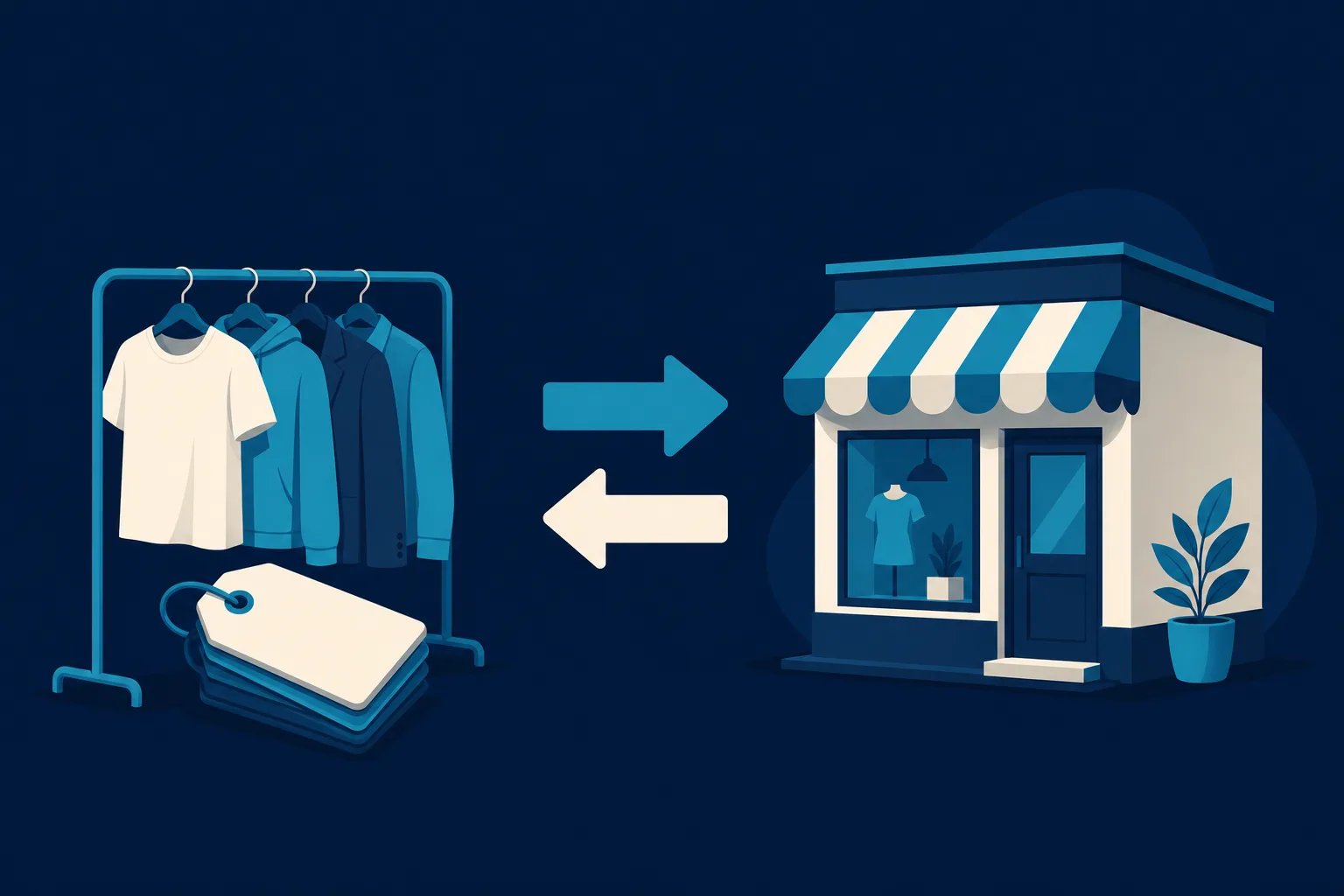
Most local businesses have one type of customer. A consignment shop has two, and they want opposite things.
Sellers show up with a car trunk full of clothes, furniture, or gear and one question in their head: what is your cut, and how do I get paid. Buyers show up looking for a deal on something good, and their real question is what is on your racks right now that was not there last week. A single storefront has to answer both, and so does your website.
That is why building a website for a consignment shop is different from building one for a normal store. If you only talk to buyers, sellers never bring you inventory, and you have nothing to sell. If you only talk to sellers, buyers never come in, and your consignors get frustrated that their stuff is not moving. The site that works speaks to both, clearly, on the same few pages. This guide walks through exactly how to build that.
Start by naming what you take and what you do not
The fastest way to waste everyone's time is to be vague about what you accept. Someone reads "we take gently used items," drives across town with three bins, and you turn away two of them at the counter. Now they are annoyed and they tell people.
Put your intake rules in writing on the site, in plain terms:
- The categories you take. Women's clothing sizes 0 to 24, mid-century furniture, kids' gear, brand-name handbags, whatever your shop actually is.
- The condition bar. No stains, no pet hair, no missing buttons, freshly laundered, seasonally current.
- The brands or price floors you will not take. If you pass on fast fashion or anything under a certain resale value, say so.
- The stuff you never take. Cribs older than a certain year, used mattresses, recalled car seats, opened cosmetics.
Being picky in public is not rude, it is a filter that saves you hours. The right sellers read your list and think "that is exactly my closet." The wrong ones self-select out before they load the car. A clear intake page is the single highest-value thing on a consignment shop website, and almost nobody does it well.
Explain the split so sellers trust you before they walk in
Consignment lives or dies on trust, because you are holding someone else's property and promising to pay them later. A seller who does not understand your terms assumes the worst. Spell out the whole deal on the site so there are no surprises at the counter.
Cover the questions every consignor actually has:
- The split. What percentage they keep and what you keep. If it slides based on price or category, show the tiers.
- The consignment period. How many weeks an item stays before it is marked down or returned.
- Markdowns. Whether prices drop automatically after a set time, and by how much.
- Payout. How they get paid, cash or store credit or check, and whether credit is worth more.
- Unsold items. Whether they pick leftovers up by a deadline or you donate them.
You do not need legal language. A short, honest breakdown in normal words does more for trust than a wall of fine print. When a seller understands the deal before they arrive, the counter conversation is quick and friendly instead of a negotiation. That is also the page that turns a one-time drop-off into a repeat consignor who keeps feeding you inventory season after season.
Make "what is new this week" the whole point for buyers
Here is the thing that makes consignment special and that most shop websites completely miss. Your inventory is never the same twice. A regular buyer is not loyal to a product line, they are loyal to the thrill of the find. The question living in their head is always the same: what came in since I last looked.
Your website should answer that question louder than anything else. You do not need a full online store with a checkout for every item. For most local consignment shops, that is more work than it is worth, because items are one of a kind and sell in the store. What you need is proof of freshness:
- A "just in" section with photos from this week's arrivals.
- Real dates or a "new every day" promise so people know the pictures are current.
- A few standout pieces highlighted, the designer bag, the solid oak dresser, the barely-worn boots.
You are not trying to sell that exact dresser online. You are trying to make someone think "if that came in, I should go see what else is there." Fresh photos do that. Stale photos do the opposite, and a website that clearly has not changed in a year quietly tells buyers your racks have not changed either.
This is also where updating your site has to be easy, because it is something you should do weekly, not once. If refreshing the "just in" gallery means emailing a web guy and waiting three days, it will not happen. It has to be as fast as posting a photo, or it stops.
Your hours and location page has to earn its keep
Consignment is a walk-in business on both sides. Sellers drop off in person, buyers browse in person. So the boring details matter more here than almost anywhere.
Get these dead right and keep them right:
- Your real hours, including the ones that are different. Many shops only take drop-offs on certain days or before a certain time so staff can process intake. Put that front and center.
- Whether sellers need an appointment or can just walk in with items.
- How much they can bring at once. "Two bins or one carload per visit" saves a lot of counter drama.
- Parking and the door to use, especially for someone hauling furniture.
- Seasonal switches. If you take fall and winter starting in August and spring and summer starting in February, that calendar belongs on the site, because a seller who shows up with shorts in October and gets turned away may not come back.
Wrong hours are worse than no hours. Someone who drives over with a trunk full of coats on a day you are closed for intake does not blame the internet, they blame you. Make sure whatever your site says matches the sign on the door, and that both match what Google shows when someone searches your shop by name.
Build separate front doors for the two audiences
Because you are talking to two different people, your homepage should split the path almost immediately. Think of it as two clear buttons above everything else: one that says something like "Sell your items" and one that says "Shop what is new." A confused visitor bounces, and a consignment shop confuses visitors more than most because a seller and a buyer want completely different things from the same site.
The seller path leads to intake rules, the split, hours for drop-off, and how to get started. The buyer path leads to the fresh inventory, your categories, and directions to the store. A short "how consignment works" explainer sitting between them helps the person who has never done this before and is nervous about how it all works. A lot of your best future sellers are people cleaning out a closet or a parent's house for the first time. Answer their basic questions and you win them over competitors who assume everyone already knows the drill.
Let Google send you both sellers and shoppers
The people you want are already searching. Sellers type things like "sell used furniture near me" or "consignment shop that takes designer bags." Buyers type "secondhand furniture" or "consignment near me" plus your town. You want to be the shop that shows up for both.
A few practical moves:
- Put your town and neighborhood in your page text naturally, not stuffed, just present.
- Make separate, honest sections for the categories you are known for, so someone searching "kids consignment [your town]" lands on a page about exactly that.
- Claim and fill out your Google Business Profile completely, with current hours, photos of the actual store, and a link to your site. For a walk-in business, this is not optional, it is where most people find you.
- Keep a short blog or tips section if you have it in you. A post on how to prep clothes for consignment or which furniture actually sells brings in both sides and shows Google you are a real, active local business.
You do not need to outrank a national resale app. You need to be the obvious local answer for people who want to sell or shop in person, today.
The honest part: how to actually get this built
You could build this yourself. A Wix or Squarespace site is affordable, and if you enjoy tinkering and have the evenings, you can get a decent consignment site up. The catch is the weekly upkeep, because a consignment site that is not refreshed loses the one thing that makes it work, the feeling of fresh inventory. Be honest with yourself about whether you will keep it current after the excitement wears off. WordPress gives you more power and more maintenance, which for a busy shop owner usually means more of a headache. And a hands-on local web designer is a fine choice if you want a real person to call, though you will pay for every future change and every "just in" refresh.
If you would rather run your shop than run a website, this is where a done-for-you option earns its keep. Saynovo builds the whole site for you at agency quality, then lets you change it by talking to it. You say "swap the just-in photos for these six" or "we are now taking spring items starting February 1," and it updates. For a consignment owner who is already sorting racks and settling with consignors all day, being able to refresh the site in the time it takes to say a sentence is the difference between a site that stays alive and one that goes stale.
The best part is you can see yours before deciding. Saynovo can import your existing Google Business Profile and generate a first version of your site for free, so you get to look at a real consignment site with your name on it instead of guessing.
Your next step
You do not need a giant online store. You need a site that turns strangers into sellers and browsers into regulars, and it comes down to a handful of clear things:
- Say exactly what you take and what you do not.
- Explain the split and the payout so sellers trust you before they arrive.
- Show what is new this week, and keep it genuinely new.
- Get your hours, drop-off rules, and seasonal switches exactly right.
- Give sellers and buyers two clear front doors.
Pick the one that is most broken for you right now, fix that this week, and move to the next. A consignment shop that answers both sides of the counter online will out-earn the prettier shop down the street that only talks to one.