Here is a comforting truth first: plenty of customers find businesses without a website every single day. You are not invisible. If you have a phone, a van with your name on it, a few happy neighbors, and a Google listing, people are finding you right now.
So why read a whole article about it? Because finding you is only the first half of the trip. The second half is deciding to actually contact you. That is where a lot of business quietly leaks away, and because it is quiet, most owners never see it happen. Nobody calls to tell you they almost hired you and then went with someone else. They just do it.
This post walks the exact paths a real person takes to find a business without a website, and it stops at each spot where that person tends to fall off. Once you can see the drop-off points, you can decide whether they are worth fixing.
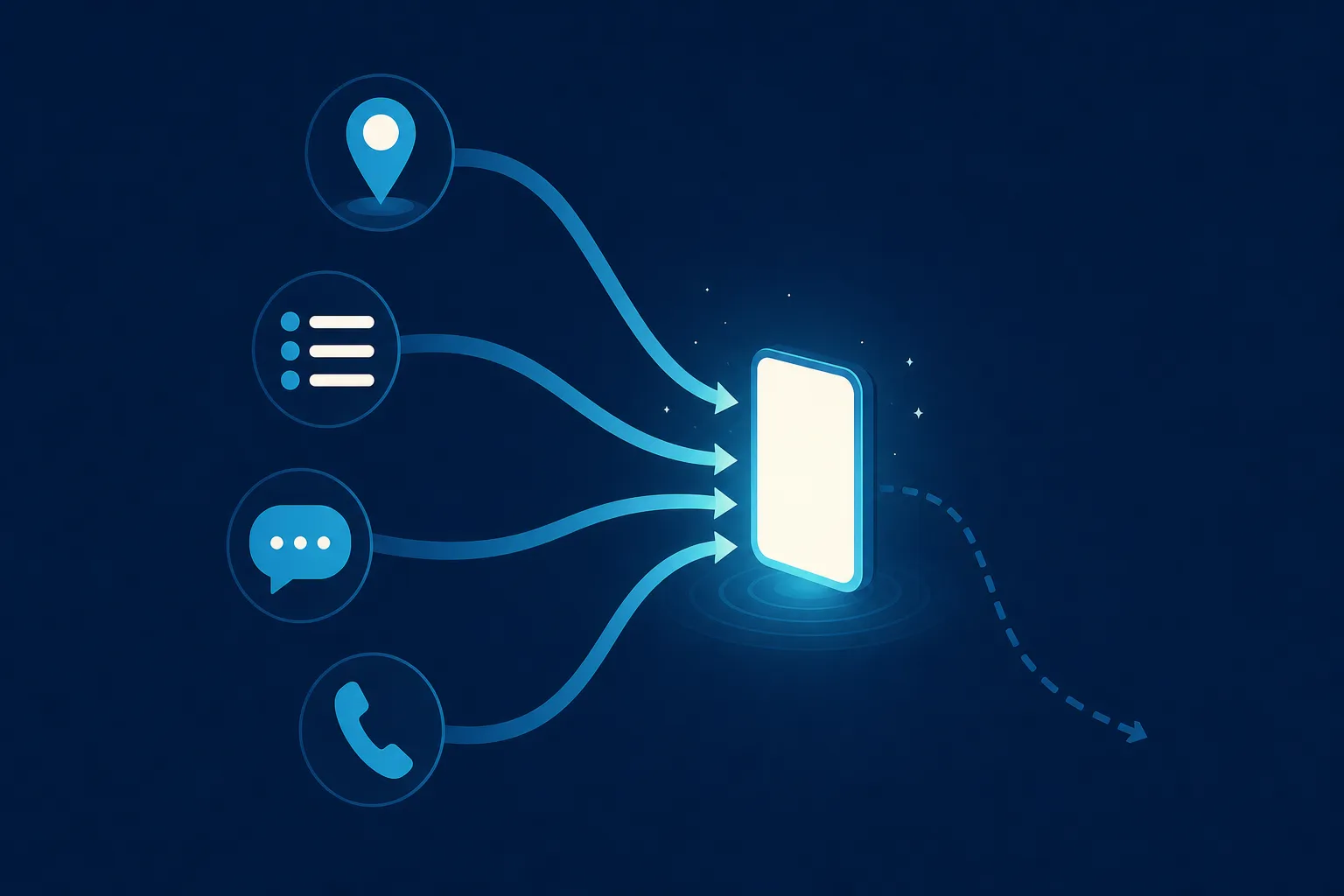
The four ways people find you when you have no website
Almost every new customer arrives through one of four doors. Knowing which door matters, because each one hands the customer off differently.
1. Google Maps and the map search
Someone types "drywall repair near me" or "dog groomer open now" into their phone. Google shows a map with pins and a stack of listings underneath. If your Google Business Profile is set up, you show up here even with no website at all. This is the single biggest source of found-but-not-website traffic for local businesses, and it is genuinely powerful.
2. Directories and third-party platforms
Yelp, Angi, Thumbtack, Nextdoor, the Chamber of Commerce list, a local Facebook group, an industry directory for your trade. People browse these, especially for bigger or riskier jobs where they want to compare a few names.
3. Word of mouth and referrals
A neighbor says "call this guy, he did our roof." A customer texts your number to a friend. This is the highest-trust door of all, because someone already vouched for you before the person ever heard of you.
4. Social media
Someone spots your work on an Instagram post, a TikTok of a job in progress, or a friend tagging you in a local group. They are curious. They tap your profile to learn more.
Notice that all four doors get the customer to the same place: a moment where they want to know a little more before they commit. That moment is where you either close the gap or lose them.
The handoff moment nobody sees
Picture the customer at the exact second after they find you. They are interested. They have a question in their head, usually one of these:
- Do they actually do the specific thing I need?
- Do they cover my town?
- Are they any good, and can I see proof?
- How much roughly, and how fast?
- How do I reach them without feeling like I am bothering a stranger?
With a website, all of those answers sit in one calm place they can read at their own pace, at 9pm, without talking to anyone. Without a website, the customer has to get those answers some other way, and every "other way" adds friction. Friction is where you lose them.
Let me show you the drop-off at each door.
Where the map search loses you
Google Maps is great at getting you found. It is not great at closing the sale for you, and that is the trap. The listing feels like enough because it has your name, phone, reviews, and hours. But watch what the customer does next.
They tap your listing. They see a "Website" button on competitors and a grayed-out gap on yours. Small thing, big signal. Then they want detail your listing cannot hold: your full service list, your service area spelled out, before-and-after photos of the exact job they need, an answer to "do you handle older homes" or "are you licensed for this." Google Maps has no room for any of that.
So the customer does the easy thing. They tap the competitor right below you who has a website, because that name lets them read for two minutes and feel sure. You were found first and hired second. You will never know it happened.
The map got you found. The missing website is why the person three pins down got the call.
Where directories lose you
Directories are comparison machines. People use them precisely to line up three or four options side by side. When your row is the only one with no website link while the others let the customer click through and get comfortable, you look like the least established choice on the page, even if you do the best work in town.
There is a second, sneakier problem. On a directory, you do not control the story. The platform decides what shows, in what order, next to whose ad. Many of these platforms also sell your customer's attention to the businesses that pay them. You are renting a spot in someone else's storefront. A website is the one place online that is yours, where the pitch is only about you and nobody is bidding to distract the reader.
Where word of mouth loses you
This one surprises owners, because referrals feel bulletproof. They are the warmest lead you can get. But even a warm referral cools down in the gap.
Here is the real sequence. Your happy customer tells their neighbor about you. The neighbor is interested but busy, so they do not call right that second. Later, they try to remember your name. They half-remember it. They search it. If nothing solid and reassuring comes up, the mental momentum fades. Meanwhile the original customer only had your phone number to pass along, not a link, so there was nothing easy to text.
A referral plus a website is a closed loop: "here, this is them" with a link the friend can tap, read, and act on in one motion. A referral without a landing spot is a name that has to survive a few days of a stranger's memory. Some names do not make it.
Where social media loses you
Social is a discovery engine, not a decision engine. Someone sees your work and gets a spark of interest. But social profiles are built to keep people scrolling, not to send them to you. The person who admired your bathroom remodel taps your profile, finds a grid of photos and no clear "here is how to hire me," and the feed pulls them back in within seconds. The spark dies in the scroll.
Social is also rented ground. The platform owns the audience, changes the rules, and can bury or suspend an account overnight. A website is where you turn a moment of interest into a booked job, and it is the one asset that is actually yours if a platform ever disappears.
The pattern behind all four
Every door has the same shape. The channel that found you is good at attention and bad at answers. The customer needs answers before they act, and when the answers are not there, they route around you to whoever made deciding easy. You do not lose because you were not found. You lose in the ten quiet seconds between interest and action.
The fix is not "be everywhere." It is having one credible place to land, so that whichever door a person comes through, they arrive somewhere that answers their five questions and makes the next step obvious. That place does not replace your Google listing, your referrals, or your social. It catches all of them.
Why this gap is wider than it used to be
A generation ago, a phone number in the Yellow Pages really was enough. People expected to call, ask questions out loud, and decide on the phone. That is not how a customer behaves now. Today the phone call is the last step, not the first. People want to do their quiet homework before they ever dial, because dialing feels like commitment and nobody wants to commit to a stranger they cannot check.
Two newer habits make the missing landing spot cost you more than it would have a few years back. First, almost all of this happens on a phone, in spare seconds, one-handed, often at night. There is no patience for hunting. If the answer is not right there, the thumb moves on. Second, people now expect to verify a business before trusting it, the same way they check a product before buying. When there is nothing to verify, the safe assumption is not "small and local," it is "risky, skip it." The bar quietly rose, and a listing with no home base now reads as less finished than it did in 2019.
What that landing spot actually needs
You do not need a big, complicated site. For a local business, a small, honest one that loads fast on a phone beats a fancy one every time. The must-haves are short:
- A clear headline that names exactly what you do and the town or area you serve
- Your real services listed in plain words, so "do they do my thing" is answered instantly
- A few real photos of your own work, not stock images
- A handful of reviews or a line about who has trusted you
- A phone number that a thumb can tap, and a simple way to send a message
- One obvious next step repeated near the top and bottom: call, text, or book
That is it. A page like that turns your Google listing from a dead end into a doorway, gives your referrers a link to send, and gives a curious social visitor somewhere real to land.
The good news about the starting point
If you already have a Google Business Profile, the hardest part is done. That profile is a tidy summary of your business, and it is the perfect seed for a website. This is exactly why Saynovo lets you import your existing Google Business Profile and generate a full website around it, free on your first generation and no card, so the place people land starts from the information you already keep up to date and you say the rest into place.
And because plans change, you fix the site by talking to it. If you add a service or start covering the next town over, you just say so, in plain English, and the page updates. No dashboard to learn, no waiting on a web person. For a busy owner who found this article between jobs, that is the whole point: the landing spot exists, it stays current, and it stops the quiet leak without becoming another chore.
Your next step
Pick the door most of your customers come through. Maps, a directory, a friend's referral, or a social post. Then open your phone and take that exact trip yourself, as if you were a stranger who needs your service today. Find your business, then try to answer your own five questions using only what is publicly there.
Wherever you get stuck or annoyed is precisely where a customer gives up. That spot is your leak. The moment you give people one credible place to land, every door you already have starts closing sales instead of leaking them.