The short answer
Yes, you need both. A domain is your address, the name people type to find you, and hosting is the space your website's files actually live on. One without the other gets you nowhere.
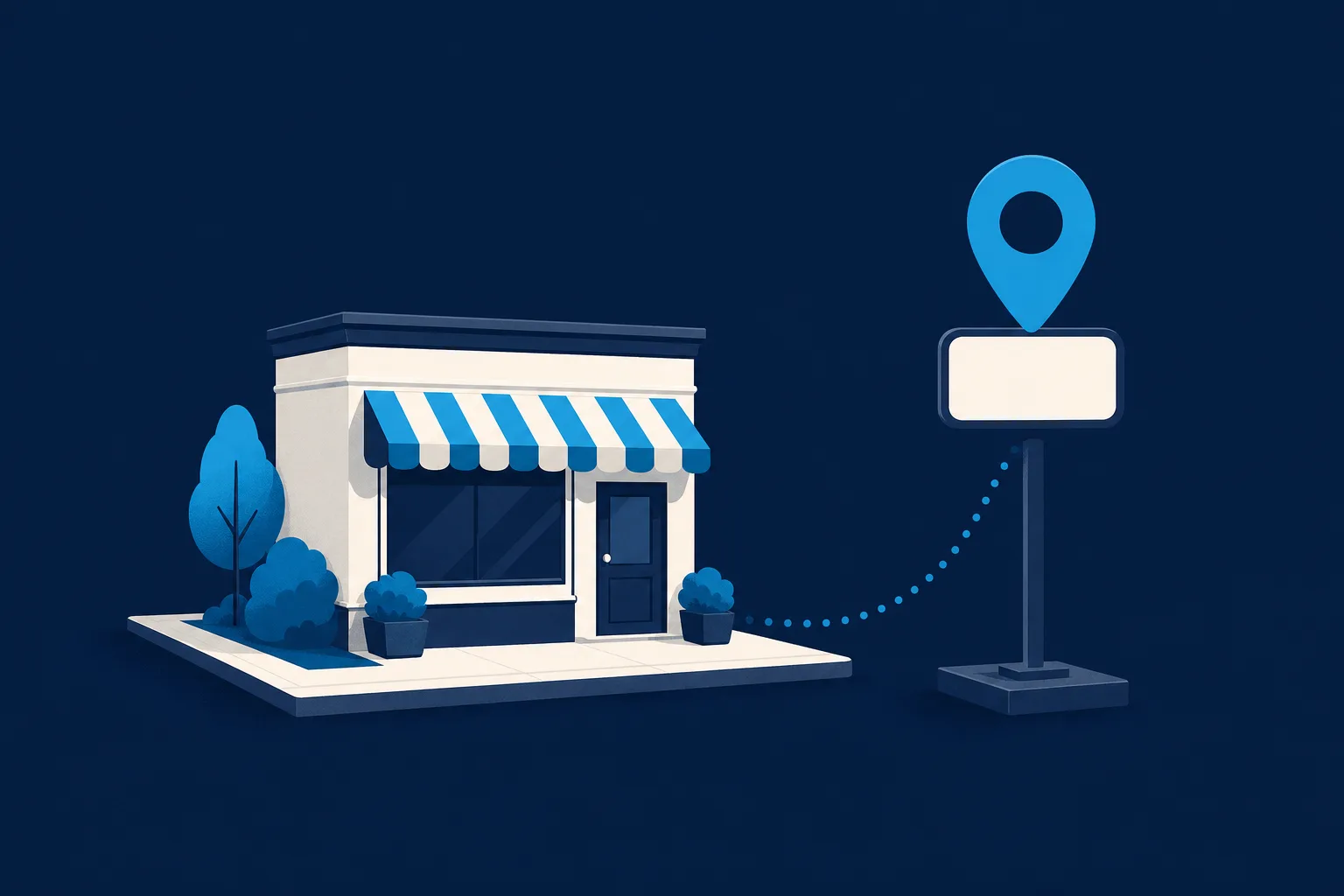
A domain on its own is just a name pointing at nothing, and hosting on its own is a building with no address on the door. You buy them separately or from the same company, whichever you prefer, and they connect through a simple setting that tells the domain which host to send visitors to.
A domain typically costs somewhere between $10 and $20 a year for a normal .com, and it renews every year for as long as you want to keep it. Hosting is usually a monthly or annual charge on top of that. Watch the renewal price rather than the introductory one, because the first year is often discounted and the second is not.
This changes if you use a platform that includes hosting in the price. Then you only buy the domain, and the hosting is handled for you.
If you are trying to get a website up for your plumbing company, your salon, or your restoration business, you have probably run into two words that keep showing up on every sign-up page: domain and hosting. And the question in your head is simple. Do I need a domain and hosting, or is one of them enough?
Here is the short answer. Yes, you need both, and they do two different jobs. The good news is that neither one is complicated once someone explains it in plain terms instead of tech jargon. This guide does exactly that, so you can buy the right things, avoid paying for stuff you do not need, and never get stuck when a renewal notice shows up two years from now.
The one analogy that makes it click
Think of your website like a shop.
- The domain name is your street address. It is the thing people type or say to find you: yourcompany.com. Without it, customers would have to remember a long string of numbers.
- The hosting is the actual building and the land it sits on. It is the computer, running around the clock, that stores your pages, photos, and text and hands them to anyone who visits.
A street address with no building behind it points to an empty lot. A building with no address on the map is impossible for anyone to find. You need both for people to walk in the door. Most of the beginner guides use some version of this same comparison, and it holds up well, so keep it in your back pocket.
What a domain name really is
A domain name is the readable label for your site, like acmeroofing.com. Behind the scenes every website actually lives at a numeric address called an IP address, something like 192.0.2.14. Nobody wants to hand out a number like that on a business card, so the domain name system was invented to map an easy name to that number.
A few things worth knowing:
- You do not buy a domain forever. You register it, usually one year at a time, and you keep it as long as you keep renewing. Miss the renewal and someone else can grab it.
- The ending matters less than people think. A .com is still the most familiar and the safest default for a local business. Newer endings like .co or .services can work, but if the .com version of your name is available and affordable, take it.
- Keep it short, easy to say out loud, and hard to misspell. Your customers will read it off a truck, hear it in a radio ad, or type it while distracted. Avoid hyphens and clever spellings.
A common myth is that registering a domain puts a website online. It does not. Registering a domain only reserves the name. On its own it shows nothing, or it shows a blank parking page from wherever you bought it. That surprises a lot of first-timers, so it is worth saying plainly. A domain is the sign, not the store.
What web hosting really is
Web hosting is space on a server, which is just a powerful computer that stays on all the time and is connected to the internet. Your website files live there. When someone visits your address, the server sends those files to their browser, which assembles them into the page they see.
The reason you cannot skip hosting is simple. The files that make up your site have to physically live somewhere that is always awake and always reachable. Your own laptop cannot do that job. It sleeps, it moves, its connection changes. Hosting is a machine built to never go dark.
Hosting comes in several flavors, and the names can be intimidating. Here is the plain version:
- Shared hosting is the entry level. Your site shares one server with many others. It is cheap and fine for a small local business site with normal traffic.
- VPS and dedicated hosting give you more private power for heavier sites. Most local service businesses never need this.
- Managed hosting means the company handles the technical upkeep for you, such as software updates, security patches, and backups. You pay a bit more and think about it a lot less.
- Website builders and all-in-one platforms bundle the hosting invisibly. You never see a server. You just edit your site and it is live.
For a typical roofer, dentist, gym, or cleaning company, you do not need the expensive tiers. You need something reliable, reasonably fast, and backed up. That is it.
How the domain and the hosting connect
This is the part that trips people up, so here is what actually happens when someone visits your site:
- A visitor types your domain into their browser.
- The browser asks the domain name system where that domain points. This is controlled by settings called nameservers or DNS records.
- Those records point to the IP address of your hosting server.
- The server sends back your website files and the page appears.
That whole round trip happens in under three seconds. The one setting you may hear about is the nameserver, which is the pointer that tells your domain which hosting company to send visitors to. If you buy your domain and hosting from the same company, they usually connect these for you automatically and you never touch it. If you buy them from two different companies, you, or whoever builds your site, will paste a couple of settings to link them. It is a five-minute task, not a project.
Do you have to buy them from the same company?
No. You can register a domain at one company and host your site at a completely different one. Plenty of business owners do exactly that, sometimes to keep the domain with a registrar they trust and the hosting with a builder they like.
Here is the honest tradeoff:
- Buying both from one provider is simpler. The connection is done for you, there is one login, and one bill. This is the path of least resistance for most non-technical owners.
- Buying them separately gives you flexibility. You can move your hosting later without giving up your domain, and you can shop for the best price on each. The cost is that you handle the linking step yourself.
There is no wrong choice here. If the idea of connecting two accounts makes you nervous, keep them together. If you want maximum control and portability, split them.
Can you register a domain without hosting?
Yes, and there are good reasons to. You might buy a domain months before your site is ready, just to lock in the name before a competitor does. You might buy it only to run a professional email address like you at yourcompany.com, which needs a domain but not a full website. Or you might be protecting a brand name and misspellings of it.
Locking in your business name as a domain early is cheap insurance. Names get taken, and getting one back later can be expensive or impossible.
Just remember that a domain sitting by itself does not put a working website online. It holds the name until you are ready to point it at hosting.
What all of this actually costs
Prices move around, but here are honest ranges so you can spot a bad deal:
- Domains typically run about ten to twenty dollars per year for a standard .com. Some are pricier if the name is in demand.
- Basic shared hosting is usually a few dollars a month. Managed and higher-tier hosting costs more.
Two things to watch, because this is where people get burned:
- The teaser price is not the renewal price. That first-year deal often jumps at renewal. Before you commit, find the renewal rate, not just the intro rate.
- Do not pay for add-ons you were not planning to buy. Checkout pages love to pre-check extras like site backups, security suites, and privacy protection. Some are genuinely useful, but decide on purpose rather than by accident.
What the popular guides tend to skip
Most articles answer the do I need a domain and hosting question and stop there. A few practical things they leave out matter just as much for a business owner:
- Turn on auto-renew for your domain. A lapsed domain is the single most common way small businesses lose their web address and their email overnight.
- Keep the login and the recovery email for your domain in a safe place you control, not only with the person who set it up. If they disappear, you still own your name.
- Ask who handles backups. If your site vanishes, a recent backup is the difference between a five-minute restore and rebuilding from scratch.
- Custom email is separate. Web hosting stores your site. A professional email address at your domain is often a separate service, though many providers bundle it. Confirm before you assume you have it.
None of this is hard. It is just the stuff nobody warns you about until something breaks.
A simpler path some owners take
If reading all of this made you want to close the tab, there is another route. Some done-for-you platforms fold the domain and the hosting into the service so the plumbing is handled behind the scenes. You are not logging into a server or pasting nameserver records. You point at your own address, and the site is served and kept online for you.
Saynovo works this way for local businesses. It builds your site from your Google Business Profile, lets you change it by describing what you want in plain words, and then puts it live on your own custom web address with the hosting side managed for you. You still own your name and your presence. You just skip the server wrangling. It is one way to answer the domain-and-hosting question without becoming your own IT department.
So, do I need a domain and hosting? The bottom line
Yes. Every live website needs both a domain and hosting, because they solve two different problems. The domain is the memorable address people use to find you. The hosting is the always-on machine that stores your site and delivers it to every visitor. One without the other gives you either an address that leads nowhere or a site that no one can reach.
Beyond that, the smart moves are simple. Pick a short, clear .com if you can, turn on auto-renew so you never lose the name, keep your logins somewhere safe, watch the renewal prices, and confirm who is handling backups and email. Whether you buy the two pieces yourself, bundle them from one company, or let a managed service handle the whole thing, you now know exactly what you are paying for and why you need it.